Comparing US Community College Pathways: How to Save Up To 60% on Your First Two Years of Higher Education in 2026
The dream of a higher education in the United States is often accompanied by the daunting reality of its escalating costs. As we look towards 2026, prospective students and their families are increasingly seeking innovative and financially prudent ways to achieve their academic goals without accumulating crippling debt. One of the most effective and often overlooked strategies is leveraging Community College Savings pathways. These institutions offer a compelling alternative, providing high-quality education at a fraction of the cost of traditional four-year universities, particularly for the crucial first two years.
This comprehensive guide will delve deep into the world of US community colleges, exploring how they serve as a strategic gateway to a bachelor’s degree, allowing students to save upwards of 60% on their initial higher education investment. We will examine the financial advantages, academic benefits, seamless transfer options, and practical steps to navigate this smart educational route. By understanding the intricacies of community college pathways, you can make informed decisions that pave the way for a successful and affordable academic future.
The Unmistakable Financial Advantage of Community College Pathways
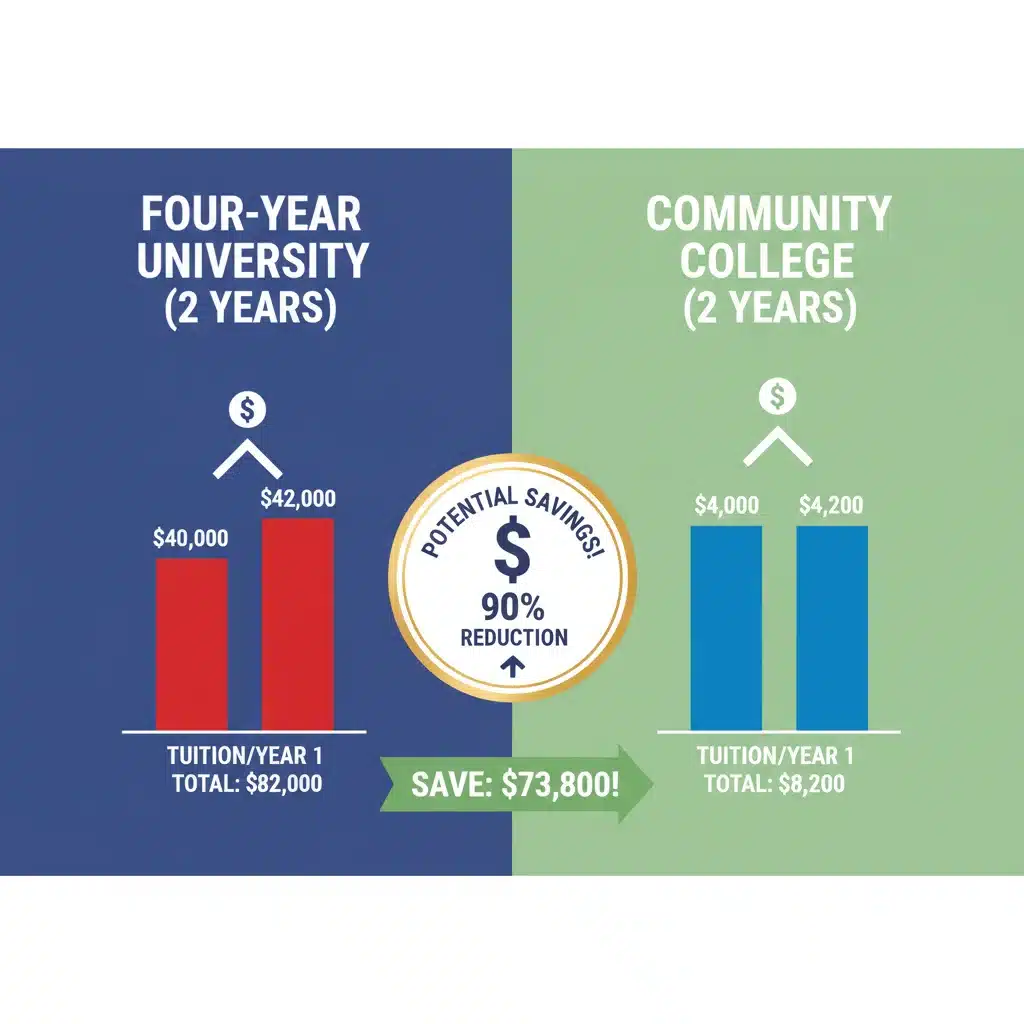
The primary allure of community colleges lies in their significantly lower tuition fees. When considering the trajectory of higher education costs into 2026, the gap between community college and four-year university tuition is projected to remain substantial, if not widen. For many families, this represents a pivotal opportunity for substantial Community College Savings.
Drastically Reduced Tuition Fees
On average, community college tuition can be anywhere from one-third to one-tenth the cost of a public four-year university, and even less when compared to private institutions. This immediate reduction in expenses for the freshman and sophomore years translates into thousands, sometimes tens of thousands, of dollars saved. These savings aren’t just theoretical; they directly impact a student’s ability to avoid or minimize student loans, thereby reducing post-graduation financial burdens.
Lower Associated Costs
Beyond tuition, community colleges often come with lower associated costs. Many students can live at home, eliminating expensive room and board fees. Commuting costs are typically less than relocating to a distant university. Textbooks and other academic materials might also be more affordable due to specific program structures or local initiatives. These cumulative savings contribute significantly to the overall financial benefit of starting at a community college.
Financial Aid Accessibility
Community colleges are also eligible for federal financial aid, including Pell Grants and federal student loans. Often, students who might not qualify for substantial aid at a more expensive university find that their financial needs are more adequately met at a community college due to the lower sticker price. This makes higher education accessible to a broader demographic, reinforcing the concept of Community College Savings as an equitable pathway.
Academic Excellence and Personalized Learning Environments
Beyond the financial benefits, community colleges offer a robust academic experience that often rivals, and in some aspects surpasses, the initial years at larger universities. The focus on teaching, smaller class sizes, and dedicated faculty create an ideal environment for foundational learning.
Dedicated Faculty and Smaller Class Sizes
Unlike many large universities where introductory courses are often taught by graduate assistants, community college courses are typically led by experienced professors whose primary focus is teaching. These instructors are often experts in their fields, bringing real-world experience into the classroom. Furthermore, smaller class sizes mean more personalized attention, allowing students to engage more deeply with the material and receive individualized support. This can be particularly beneficial for students transitioning from high school, helping them to build strong study habits and academic confidence.
Strong Foundational Curriculum
Community college curricula are meticulously designed to provide a strong academic foundation, covering general education requirements that are universally accepted by most four-year institutions. Whether it’s English composition, mathematics, science, or humanities, students receive a thorough grounding in core subjects. This rigorous preparation ensures that when they transfer, they are well-equipped to handle the academic demands of a university curriculum.
Diverse Program Offerings
Many community colleges also offer a wide array of career-focused programs and technical certifications. While the focus of this article is on transfer pathways, it’s worth noting that this diversity provides students with multiple options, whether they plan to transfer or enter the workforce directly. This flexibility adds another layer of value to the community college experience, making it a versatile educational choice.
Seamless Transfer Pathways: A Bridge to a Bachelor’s Degree
One of the most critical aspects of leveraging Community College Savings for a bachelor’s degree is understanding the transfer process. US community colleges have developed sophisticated articulation agreements and transfer programs with four-year universities to ensure a smooth transition for students.
Articulation Agreements and 2+2 Programs
Most community colleges have established articulation agreements, often referred to as ‘2+2 programs,’ with public and sometimes private universities. These agreements guarantee that credits earned at the community college will transfer directly and apply towards a specific bachelor’s degree program at the partner university. This eliminates uncertainty and ensures that students’ academic efforts are fully recognized. Researching these agreements early is crucial for any student planning this pathway.
Guaranteed Admission Programs
Some states and individual universities offer guaranteed admission programs for community college graduates who meet specific academic criteria (e.g., maintaining a certain GPA). These programs provide an invaluable sense of security and a clear roadmap for students, knowing that their hard work at community college will directly lead to admission into their desired four-year institution. This foresight is a key component of maximizing Community College Savings while ensuring academic progression.
Transfer Advising and Support
Community colleges typically have dedicated transfer advising centers and counselors who specialize in guiding students through the transfer process. These advisors help students choose the right courses, understand specific university requirements, prepare application materials, and navigate deadlines. This personalized support is invaluable in ensuring a successful transition.

Navigating the Community College Pathway in 2026: Practical Steps
For those considering the community college route to maximize Community College Savings in 2026, here are practical steps to ensure a successful journey:
Step 1: Research and Identify Your Goals
Before enrolling, clearly define your academic and career goals. Do you know what major you want to pursue? Which universities are you considering for your bachelor’s degree? This clarity will help you choose a community college that has strong transfer agreements with your target universities and offers programs aligned with your interests.
Step 2: Explore Local Community Colleges and Their Offerings
Investigate community colleges in your area or those that offer online programs if geographic flexibility is important. Look at their specific programs, faculty credentials, student support services, and, most importantly, their transfer agreements with four-year institutions. Many community colleges publish their articulation agreements online, making this research relatively straightforward.
Step 3: Connect with Transfer Advisors Early
As soon as you enroll, or even before, meet with a transfer advisor. These professionals are your best resource for planning your academic path. They can help you select courses that will transfer seamlessly, explain GPA requirements for guaranteed admission programs, and keep you on track for your desired university.
Step 4: Maintain Strong Academic Performance
To ensure a smooth transfer and eligibility for competitive programs, maintaining a high GPA at community college is paramount. Most universities require a minimum GPA for transfer, and a stronger academic record can enhance your chances of admission to more selective programs or institutions.
Step 5: Engage in Campus Life and Extracurriculars
While community colleges may not always have the same extensive campus life as large universities, many offer clubs, organizations, and leadership opportunities. Engaging in these activities can enrich your college experience, develop valuable skills, and strengthen your transfer application, making you a more well-rounded candidate.
Step 6: Plan for the Transfer Application Process
Understand the application deadlines and requirements for your target universities. Start preparing your application materials well in advance, including essays, recommendations, and transcripts. Your transfer advisor can provide crucial assistance throughout this process.
Addressing Common Misconceptions about Community Colleges
Despite their numerous advantages, community colleges sometimes face misconceptions. It’s important to address these to fully appreciate the value of Community College Savings pathways.
Myth: Community Colleges Offer Inferior Education
Reality: This is perhaps the most persistent myth. As discussed, community colleges boast highly qualified faculty, rigorous curricula, and often smaller class sizes that foster a more personalized learning experience. The quality of education is designed to meet or exceed the foundational requirements for university transfer, ensuring students are well-prepared.
Myth: Community College Credits Don’t Transfer
Reality: While it’s true that not all credits from every institution will transfer everywhere, community colleges with strong articulation agreements and transfer programs make credit transfer seamless. The key is proactive planning and working closely with advisors to ensure your chosen courses are transferable to your target university.
Myth: Community Colleges Lack Social Life
Reality: While community colleges may not have traditional dorm life, they often have vibrant campus communities with numerous clubs, sports teams, student government, and social events. Students can actively participate and build strong friendships and professional networks, just as they would at a four-year university.
Myth: Community College is Only for Students Who Can’t Get into a University
Reality: Many highly capable students, including those who could gain direct admission to a four-year university, strategically choose community college for financial reasons, to explore interests, or to gain a stronger academic foundation in a more supportive environment. It is a smart, intentional choice, not a fallback option, for maximizing Community College Savings.
The Future of Higher Education and Community College Pathways
As the cost of higher education continues to be a national concern, the role of community colleges is becoming even more critical. Policymakers, educators, and students are increasingly recognizing the immense value these institutions offer in terms of accessibility, affordability, and quality.
Increased Emphasis on Workforce Development
Beyond transfer pathways, community colleges are also pivotal in workforce development, offering programs that respond directly to local industry needs. This dual role strengthens their position as essential pillars of both academic and economic growth, further solidifying their importance in the higher education landscape of 2026 and beyond.
Innovation in Online Learning
Many community colleges were at the forefront of online education long before it became mainstream. Their experience and infrastructure in delivering quality online courses provide flexibility for students who may be working, have family responsibilities, or live in remote areas. This adaptability makes higher education more accessible and contributes to the overall Community College Savings model by reducing commuting and living costs.
Gateway to Diversity and Inclusion
Community colleges often serve as melting pots of diverse student populations, including first-generation college students, adult learners returning to school, veterans, and international students. This rich diversity enriches the learning environment, exposing students to a wide range of perspectives and experiences, preparing them for a globally connected world.
Conclusion: A Smart Investment for 2026 and Beyond
In conclusion, for students and families looking to navigate the complexities and costs of US higher education in 2026, community college pathways present an exceptionally smart and strategic choice. By starting at a community college, students can achieve significant Community College Savings, potentially cutting their first two years of college costs by up to 60% or more, without compromising on academic quality or future opportunities.
These institutions offer strong academic foundations, personalized learning environments, and well-established transfer agreements that provide a clear and effective bridge to a bachelor’s degree at a four-year university. By dispelling common myths and proactively planning their educational journey, students can leverage the power of community colleges to secure a high-quality, affordable higher education experience. The path through community college is not just a cost-saving measure; it’s a strategic investment in a successful and financially sound academic future.