Actionable Steps to Lower Your 2026 Student Loan Interest by 1.5%: A Practical Guide
Student loan debt is a pervasive financial burden for millions, often dictating significant life choices and delaying financial milestones. The interest rate on these loans can dramatically impact the total amount repaid over their lifetime. Even a seemingly small reduction, like 1.5%, can translate into thousands of dollars in savings, freeing up funds for other critical financial goals like saving for a down payment, retirement, or simply achieving greater financial flexibility. As we look towards 2026, proactive measures taken now can position you to significantly lower student loan interest.
This comprehensive guide is designed to empower you with the knowledge and actionable strategies needed to reduce your student loan interest by a substantial margin. We’ll delve into various avenues, from understanding your current loan landscape to exploring refinancing, consolidation, and strategic repayment approaches. Our aim is to provide a clear roadmap to help you navigate the complexities of student loan management and achieve tangible savings. By implementing the tactics outlined here, you can take control of your student loan debt and pave the way for a more secure financial future.
Understanding Your Current Student Loan Landscape
Before you can effectively lower student loan interest, you must have a crystal-clear understanding of your existing loans. This involves more than just knowing your monthly payment. You need to gather detailed information about each loan, as this will be the foundation for any strategic decisions you make.
Identify Your Loan Types: Federal vs. Private
The first crucial step is to distinguish between federal and private student loans. This distinction is paramount because the rules, repayment options, and avenues for interest rate reduction differ significantly for each type.
- Federal Student Loans: These are issued by the U.S. Department of Education. They often come with borrower protections, such as income-driven repayment plans, deferment, forbearance, and potential forgiveness programs. Their interest rates are set by Congress and are generally fixed, though they can vary based on the disbursement date. For federal loans, lowering your interest might involve consolidation (which can sometimes slightly adjust the rate) or exploring specific repayment plans that reduce the effective cost over time.
- Private Student Loans: These loans are offered by banks, credit unions, and other financial institutions. They typically have fewer borrower protections compared to federal loans. Interest rates can be fixed or variable, and are often determined by your creditworthiness at the time of application. Private loans are generally more amenable to refinancing for a lower interest rate, especially if your credit score has improved since you first took them out.
You can typically find this information by logging into your loan servicer’s online portal. For federal loans, you can also access a comprehensive overview through the National Student Loan Data System (NSLDS) at studentaid.gov.
Strategy 1: Refinancing Private Student Loans
Refinancing is often the most direct and effective way to lower student loan interest, particularly for private loans. It involves taking out a new loan, typically from a private lender, to pay off one or more existing student loans. The goal is to secure a new loan with a lower interest rate or more favorable terms.
When is Refinancing a Good Option?
Refinancing is generally beneficial if:
- Your Credit Score Has Improved: Lenders offer lower rates to borrowers with excellent credit. If your credit score has significantly improved since you first took out your loans, you’re a strong candidate.
- Your Income Has Increased: A stable and higher income demonstrates your ability to repay the loan, making you a more attractive borrower.
- You Have High-Interest Private Loans: Private loans often have higher and/or variable interest rates, making them prime targets for refinancing.
- You Want to Simplify Payments: Consolidating multiple private loans into one new loan can simplify your monthly payments and potentially reduce your interest rate.
- Interest Rates Have Dropped: If market interest rates have decreased since you borrowed, you might qualify for a lower rate now.
The Refinancing Process
- Shop Around: Don’t settle for the first offer. Get quotes from multiple lenders (banks, credit unions, online lenders) to compare rates, terms, and fees. Many lenders offer pre-qualification checks that won’t impact your credit score.
- Compare Offers: Look beyond just the interest rate. Consider loan terms (e.g., 5, 10, 15 years), whether the rate is fixed or variable, and any associated fees. A shorter loan term often comes with a lower interest rate but higher monthly payments.
- Consider a Co-signer: If your credit isn’t stellar, a co-signer with excellent credit can help you qualify for a lower interest rate.
- Apply: Once you choose a lender, complete the full application. This will involve a hard credit inquiry.
- Finalize: After approval, the new lender will pay off your old loans, and you’ll begin making payments to the new lender under the new terms.
Potential Savings from Refinancing
Let’s illustrate the impact. Suppose you have $30,000 in private student loans at an average interest rate of 6.5% with a 10-year repayment term. Your monthly payment would be approximately $340, and you’d pay around $10,800 in total interest. If you refinance to a 5% interest rate, your monthly payment might drop to around $318, and your total interest paid would be about $8,160. This is a saving of over $2,600, directly attributed to lowering your interest rate by 1.5%.
It’s crucial to remember that refinancing federal loans into a private loan means forfeiting federal borrower protections. Carefully weigh the benefits of a lower interest rate against the loss of these safety nets, such as income-driven repayment and potential loan forgiveness.
Strategy 2: Federal Loan Consolidation and Repayment Plans
For federal student loans, the path to lower student loan interest is different from private loans. While direct refinancing into a lower rate isn’t typically an option, federal loan consolidation and strategic use of income-driven repayment (IDR) plans can effectively reduce your overall cost of borrowing or make payments more manageable.
Direct Loan Consolidation
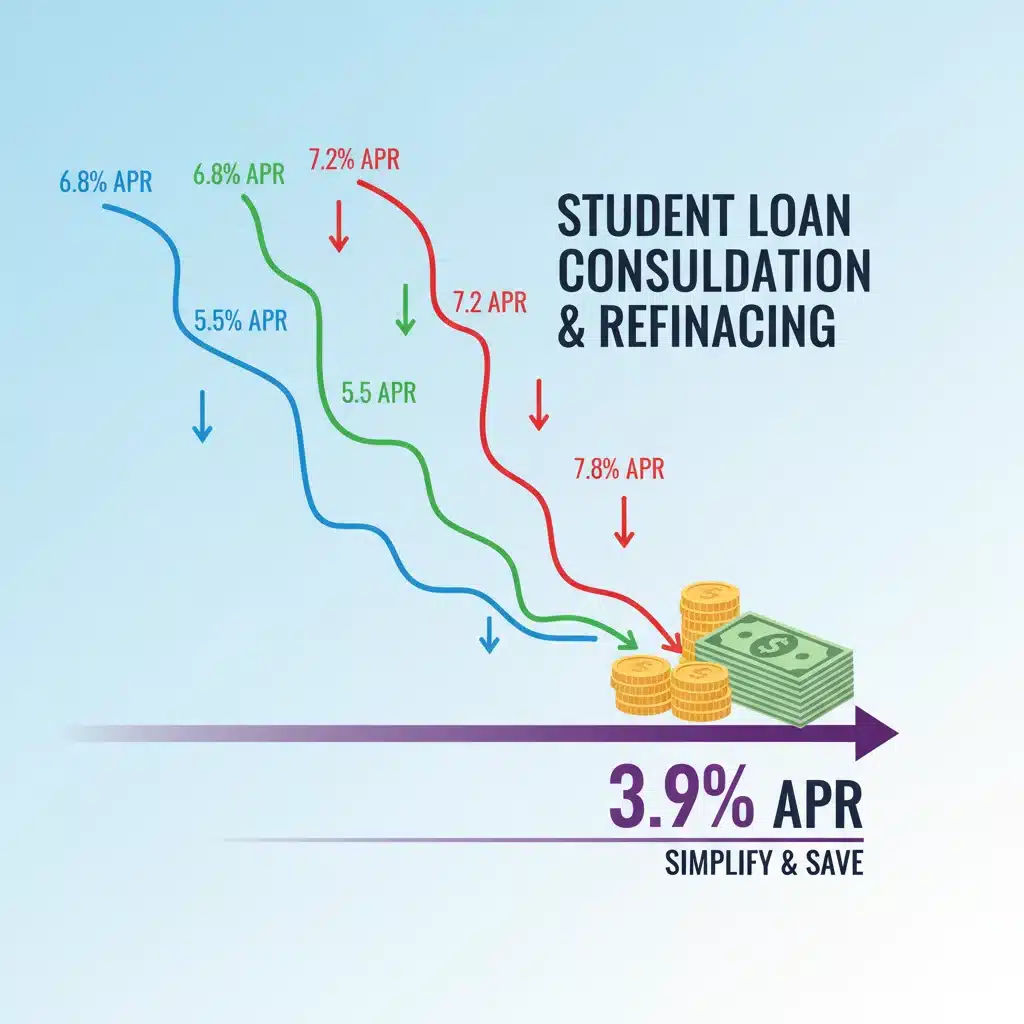
Federal Direct Loan Consolidation allows you to combine multiple federal student loans into a single new loan with one fixed interest rate. This new rate is the weighted average of your original loans’ interest rates, rounded up to the nearest one-eighth of a percentage point. While it might not drastically lower your interest rate, it offers significant benefits:
- Simplified Payments: One monthly payment instead of several.
- Access to IDR Plans: Consolidating certain older federal loans (like FFEL Program loans) can make them eligible for income-driven repayment plans and Public Service Loan Forgiveness (PSLF).
- Extended Repayment Term: You can choose a longer repayment term (up to 30 years), which lowers your monthly payment, though it will likely increase the total interest paid over time.
Consolidation itself doesn’t guarantee a lower interest rate, but it can be a strategic move to unlock other benefits that indirectly lead to lower overall costs or reduced financial strain.
Income-Driven Repayment (IDR) Plans
IDR plans are designed to make your federal student loan payments more affordable by capping them at a percentage of your discretionary income. While these plans don’t directly lower student loan interest rates, they can significantly reduce your monthly outlay and, in some cases, lead to loan forgiveness after 20 or 25 years of payments. This effectively reduces the total amount you pay, including interest.
The main IDR plans include:
- Revised Pay As You Earn (REPAYE) Plan: Payments are generally 10% of discretionary income.
- Pay As You Earn (PAYE) Plan: Payments are generally 10% of discretionary income, but never more than what you’d pay under the Standard Repayment Plan.
- Income-Based Repayment (IBR) Plan: Payments are generally 10% or 15% of discretionary income, depending on when you received your first loans.
- Income-Contingent Repayment (ICR) Plan: Payments are either 20% of discretionary income or what you’d pay on a fixed 12-year payment plan, whichever is less.
If your income is low relative to your debt, an IDR plan can drastically reduce your monthly payments. Any unpaid interest might be subsidized by the government for a period, further reducing your effective interest burden. Explore the options on studentaid.gov to see which plan best suits your financial situation.
Strategy 3: Strategic Repayment Approaches to Minimize Interest
Beyond refinancing or consolidating, your repayment strategy itself can play a pivotal role in how much interest you pay over the life of your loan. By implementing smart repayment tactics, you can effectively lower student loan interest by reducing the principal balance faster.
The Avalanche Method
The debt avalanche method is a highly effective strategy for minimizing the total interest paid. Here’s how it works:
- List All Debts: Organize all your student loans (and other debts) from the highest interest rate to the lowest.
- Make Minimum Payments: Pay the minimum required amount on all your loans.
- Extra Payments on Highest Interest Loan: Direct any extra money you have towards the loan with the highest interest rate.
- Repeat: Once the highest-interest loan is paid off, take the money you were paying on it (minimum payment + extra payment) and apply it to the loan with the next highest interest rate.
This method ensures that you tackle the most expensive debt first, saving you the most money on interest over time. While it might take longer to see the first loan paid off compared to the snowball method (which focuses on the smallest balance first), it is financially superior for reducing total interest.
Bi-Weekly Payments
Switching to bi-weekly payments can subtly but significantly reduce the total interest you pay. Instead of making one monthly payment, you make half of your monthly payment every two weeks. Here’s why this works:
- One Extra Payment Per Year: Since there are 52 weeks in a year, making bi-weekly payments results in 26 half-payments, which equates to 13 full monthly payments annually instead of 12.
- Accelerated Principal Reduction: This extra payment goes directly towards reducing your principal balance faster, meaning less interest accrues over the life of the loan.
Before implementing this, confirm with your loan servicer that bi-weekly payments will be applied correctly to your principal and won’t just be held until the next monthly due date. You might need to set up manual payments or arrange an automated schedule with them.
Making Extra Principal Payments
Any extra money you can put towards your loan principal will directly reduce the amount of interest you pay. Even small, consistent extra payments can add up. Consider applying windfalls like tax refunds, bonuses, or unexpected gifts directly to your highest-interest student loan. Always specify that these extra payments should be applied to the principal, not as an advance for future payments.
Strategy 4: Exploring Employer Assistance Programs and Tax Benefits
Beyond direct repayment strategies, there are external programs and tax benefits that can indirectly help you lower student loan interest or reduce your overall financial burden related to student debt. Leveraging these can free up funds that can then be used to make extra principal payments.
Employer Student Loan Repayment Assistance
A growing number of employers are offering student loan repayment assistance as an employee benefit. These programs vary widely:
- Direct Contributions: Some companies directly contribute a certain amount each month or year towards your student loan principal.
- Matching Programs: Similar to 401(k) matching, some employers match a portion of your student loan payments.
- Refinancing Partnerships: Employers may partner with specific lenders to offer employees preferential refinancing rates.
Check with your HR department to see if your employer offers any such programs. This benefit can be a significant boost, as employer contributions are essentially free money that directly reduces your principal, thereby reducing the total interest you pay over time.
Student Loan Interest Deduction
The IRS allows you to deduct the amount of interest you paid during the year on a qualified student loan, up to a maximum of $2,500. This is an above-the-line deduction, meaning you don’t need to itemize to claim it, and it can reduce your taxable income. While it doesn’t directly lower student loan interest, it reduces your overall tax liability, effectively putting more money back into your pocket. This extra cash can then be strategically applied to your loan principal, indirectly leading to interest savings.
To qualify, the loan must have been taken out solely to pay for qualified education expenses. You’ll receive Form 1098-E from your loan servicer at the end of the year, detailing the interest paid.

Strategy 5: Negotiation and Communication with Loan Servicers
Many borrowers overlook the power of direct communication with their loan servicers. While it’s not always possible to directly negotiate a lower interest rate on an existing loan, there are situations where communication can lead to more favorable terms or prevent financial distress, ultimately helping you manage your debt more effectively and indirectly save on interest.
Forbearance and Deferment (as a last resort)
If you’re facing temporary financial hardship, forbearance or deferment can provide a temporary pause or reduction in payments. While this doesn’t lower student loan interest – and often, interest continues to accrue during these periods – it can prevent default and give you breathing room to get back on your feet. Preventing default is crucial, as it can severely damage your credit score, making it impossible to qualify for better interest rates in the future.
Use these options sparingly and only when necessary, as accrued interest will be added to your principal balance, increasing your total debt.
Exploring Repayment Plan Changes
For federal loans, you can switch between repayment plans, including income-driven repayment plans, if your financial situation changes. A lower monthly payment can free up funds that you might be able to direct towards a higher-interest private loan, or simply allow you to avoid missing payments and incurring fees that add to your overall cost.
What About Direct Interest Rate Negotiation?
Direct negotiation for a lower interest rate on an existing loan is rare, especially for federal loans where rates are fixed by law. For private loans, it’s highly unlikely unless you’re in severe financial distress and the lender is trying to avoid a default. However, it never hurts to inquire, especially if you have an excellent payment history and your credit score has significantly improved. Some private lenders might be open to a slight adjustment to retain a good customer, but don’t expect dramatic reductions.
The more realistic approach for private loans is to use your improved creditworthiness to refinance with a new lender, as discussed in Strategy 1.
Preparing for 2026: A Timeline and Action Plan
Achieving a 1.5% reduction in your student loan interest by 2026 requires a proactive and consistent effort. Here’s a suggested timeline and action plan to guide your journey:
Immediate Actions (Next 3-6 Months)
- Audit Your Loans: Gather all loan details (balances, interest rates, servicers, loan types). Create a comprehensive spreadsheet.
- Check Your Credit Score: Obtain your free credit reports from AnnualCreditReport.com and your credit scores from various providers. Identify areas for improvement.
- Budget Review: Create or refine your budget to identify areas where you can free up extra funds for debt repayment.
- Research Refinancing Options: If you have private loans, start getting pre-qualified quotes from multiple lenders. Compare offers without impacting your credit score.
- Explore Federal Options: If you have federal loans, visit studentaid.gov to understand IDR plans and consolidation options.
Mid-Term Goals (Next 6-18 Months)
- Improve Credit Score: Focus on making all payments on time, reducing credit card balances, and avoiding new debt to boost your credit score. This is critical for securing better refinancing rates.
- Implement Repayment Strategy: Begin applying the debt avalanche method or making bi-weekly payments. Consistently direct extra funds towards your highest-interest loans.
- Re-evaluate Refinancing: If your credit score has improved or market rates have shifted, re-check refinancing offers. Aim to secure a rate reduction.
- Check Employer Benefits: Regularly inquire about any new or existing employer student loan assistance programs.
Long-Term Vision (18-36 Months, Leading up to 2026)
- Monitor Progress: Regularly review your loan balances and interest rates. Track your savings.
- Re-refinance if Possible: If you’ve already refinanced but your credit has further improved, or interest rates have dropped significantly again, consider re-refinancing for even better terms.
- Maintain Financial Discipline: Continue your strategic repayment efforts and budget adherence.
- Stay Informed: Keep an eye on changes in student loan legislation or new programs that could benefit you.
By diligently following this action plan, you can systematically work towards and achieve your goal to lower student loan interest by 1.5% or more by 2026. Consistent effort and informed decisions are your most powerful tools.
Case Studies and Success Stories
To further illustrate the impact of these strategies, let’s look at a couple of hypothetical, yet realistic, case studies:
Case Study 1: Sarah’s Private Loan Refinance
Sarah graduated with $45,000 in private student loans at an average variable interest rate of 7.2%. Her initial monthly payment was around $525 on a 10-year term. After two years of consistent work history and improving her credit score from good to excellent (by paying off a credit card and making all payments on time), she decided to explore refinancing options. She secured a new 7-year loan at a fixed interest rate of 5.5%.
- Original Loan: $45,000 at 7.2% (variable), 10-year term. Total interest: ~$18,000.
- Refinanced Loan: $40,000 (after 2 years of payments) at 5.5% (fixed), 7-year term. Total interest: ~$8,000.
By refinancing, Sarah not only reduced her interest rate by 1.7% but also opted for a shorter term, significantly reducing her total interest paid by approximately $10,000 over the life of the loan. Her monthly payment increased slightly due to the shorter term, but the long-term savings were substantial.
Case Study 2: Mark’s Federal Loan Optimization
Mark had $60,000 in federal student loans spread across several Direct Subsidized and Unsubsidized loans, with interest rates ranging from 4.5% to 6.8%. He was on the Standard Repayment Plan, struggling with a high monthly payment of $650. After a job change led to a temporary pay cut, he was worried about making ends meet.
Mark consolidated his federal loans, which created a new weighted average interest rate of 5.8%. While this wasn’t a direct reduction, the consolidation made him eligible for the REPAYE income-driven repayment plan. His new monthly payment was capped at $380, based on his lower income. During the period of lower income, the government subsidized a portion of his accruing interest, preventing it from capitalizing as much as it would have otherwise. As his income recovered, he started making extra payments whenever possible, using the avalanche method to target the highest-interest portions of his consolidated loan.
Mark’s strategy didn’t involve a direct 1.5% interest rate cut across the board but optimized his federal loans to:
- Reduce his monthly payment significantly during a tough financial period.
- Prevent interest capitalization through subsidies, indirectly reducing the total amount he would owe.
- Provide a structured path to make extra payments efficiently once his income improved.
These case studies demonstrate that whether through direct refinancing or strategic optimization of federal options, actively managing your student loans can lead to substantial savings and improved financial well-being.
Final Thoughts and Encouragement
Taking control of your student loan debt, particularly by actively working to lower student loan interest, is one of the most impactful financial decisions you can make. The strategies outlined in this guide – from understanding your loans and exploring refinancing to implementing smart repayment tactics and leveraging available benefits – offer a robust framework for achieving significant savings by 2026.
Remember, even a 1.5% reduction in interest can translate into thousands of dollars over the life of your loan, money that can be redirected towards investments, retirement, or simply a greater sense of financial freedom. The journey might seem daunting at first, but by breaking it down into actionable steps, you can systematically chip away at your debt and achieve your financial goals.
Start today by gathering your loan information. Take the time to compare options, and don’t hesitate to seek advice from a reputable financial advisor if you need personalized guidance. Your future self will thank you for the proactive steps you take now to manage your student loan debt effectively and secure a brighter financial outlook.