Breaking: New Federal Cybersecurity Mandates Expected by Q3 2026 Impacting All U.S. Businesses
The digital landscape is constantly evolving, and with it, the threats posed by cybercriminals. In response to an escalating number of sophisticated cyberattacks targeting critical infrastructure, government agencies, and private enterprises, the U.S. government is poised to roll out significant new federal cybersecurity mandates. These mandates, expected to take full effect by Q3 2026, are not merely suggestions but will be legally binding requirements impacting virtually all U.S. businesses, regardless of size or sector. This comprehensive article delves into what these upcoming federal cybersecurity mandates entail, their potential impact, and crucial steps your business can take now to ensure compliance and strengthen its cyber defenses.
The urgency for these new federal cybersecurity mandates stems from a confluence of factors: the increasing frequency and severity of ransomware attacks, state-sponsored cyber espionage, and the growing interconnectedness of global supply chains, which create numerous vulnerabilities. The current patchwork of industry-specific regulations and voluntary guidelines has proven insufficient to establish a unified and robust national cybersecurity posture. Therefore, a more standardized, enforceable framework is deemed essential to protect national security, economic stability, and the privacy of American citizens.
Understanding these forthcoming federal cybersecurity mandates is not just about avoiding penalties; it’s about safeguarding your business’s future. Non-compliance could lead to severe financial penalties, reputational damage, operational disruptions, and legal liabilities. Proactive preparation will not only ensure adherence to the new rules but also foster a more resilient and secure operational environment, ultimately enhancing your competitive edge in an increasingly digital world.
The Driving Force Behind New Federal Cybersecurity Mandates
The impetus for these sweeping federal cybersecurity mandates is multi-faceted. Recent high-profile cyberattacks, such as the Colonial Pipeline incident, the SolarWinds breach, and numerous attacks on healthcare providers, have exposed significant vulnerabilities across various sectors. These incidents highlighted critical gaps in existing cybersecurity practices, particularly concerning supply chain security, incident response capabilities, and information sharing. The government recognizes that a fragmented approach to cybersecurity is no longer sustainable in the face of sophisticated and persistent threats.
Furthermore, geopolitical tensions are contributing to an elevated threat landscape. Adversarial nations and non-state actors are continually developing advanced persistent threats (APTs) designed to disrupt critical infrastructure, steal intellectual property, and sow discord. The U.S. government’s strategy is to establish a baseline of security across all businesses to collectively raise the national cyber defense posture, making it harder for adversaries to exploit systemic weaknesses. These federal cybersecurity mandates are a direct response to these evolving threats, aiming to create a more unified and resilient digital ecosystem.
Beyond national security, economic stability is a major concern. Cyberattacks cost the U.S. economy billions of dollars annually through direct damages, business interruption, and recovery efforts. By implementing mandatory cybersecurity standards, the government seeks to mitigate these economic risks, protect American innovation, and ensure the continuity of essential services. The goal is to move beyond reactive measures to a proactive stance, where cybersecurity is integrated into the fundamental operations of every U.S. business.
Key Areas Expected to be Covered by the Federal Cybersecurity Mandates
While the final details of the federal cybersecurity mandates are still being shaped, based on current legislative discussions, executive orders, and agency guidance, several key areas are almost certain to be included. Businesses should begin focusing their efforts on these aspects:
1. Enhanced Incident Reporting and Response
One of the most critical components of the new federal cybersecurity mandates will undoubtedly be stricter requirements for incident reporting. Currently, reporting obligations vary widely by sector and jurisdiction, leading to delays and incomplete information. The new mandates are expected to standardize and expedite the reporting process, requiring businesses to report significant cyber incidents to a designated federal agency (e.g., CISA, FBI) within a much shorter timeframe, possibly within 24 or 72 hours of discovery. This rapid reporting will enable federal agencies to better understand the threat landscape, coordinate responses, and disseminate threat intelligence more effectively.
Furthermore, businesses will likely be required to demonstrate robust incident response plans, including clear roles and responsibilities, communication protocols, forensic capabilities, and recovery strategies. Regular testing and simulation of these plans will also be a probable requirement, ensuring that organizations are prepared to act swiftly and decisively when an incident occurs. The emphasis will be on minimizing downtime, data loss, and the overall impact of a cyberattack.
2. Supply Chain Cybersecurity
The SolarWinds attack highlighted the profound vulnerabilities that exist within the software supply chain. The upcoming federal cybersecurity mandates are expected to place significant emphasis on supply chain risk management. This means businesses will be held accountable not only for their own cybersecurity but also for the security posture of their vendors, suppliers, and third-party service providers. Organizations will likely be required to conduct thorough due diligence on their supply chain partners, assess their cybersecurity controls, and incorporate cybersecurity requirements into contracts.
This could involve mandating the use of Software Bill of Materials (SBOMs) to provide transparency into the components of software products, requiring vulnerability assessments of third-party software, and establishing secure development lifecycle practices among suppliers. The goal is to prevent a single point of failure within the supply chain from becoming a vector for widespread attacks. Businesses will need to map their supply chain dependencies and implement strategies to manage and mitigate risks associated with each link.
3. Multi-Factor Authentication (MFA) and Identity Management
Weak or compromised credentials remain a primary cause of data breaches. The new federal cybersecurity mandates are highly likely to standardize and enforce the widespread adoption of multi-factor authentication (MFA) for all users, particularly for access to critical systems and sensitive data. Beyond MFA, there will likely be requirements for robust identity management systems, including strong password policies, regular password rotations, and potentially biometric authentication where feasible. Privileged access management (PAM) solutions, which control and monitor elevated access to IT resources, will also probably become a mandatory component for many organizations.
Implementing strong identity and access management (IAM) controls is fundamental to reducing the attack surface. These mandates will push businesses to move beyond simple username and password combinations, adopting more secure methods to verify user identities and authorize access. This will involve not just technical implementation but also user training and awareness campaigns to ensure widespread adoption and understanding of new security protocols.
4. Data Encryption and Protection
Protecting sensitive data, both in transit and at rest, is a cornerstone of any effective cybersecurity strategy. The federal cybersecurity mandates will likely include stricter requirements for data encryption, especially for personally identifiable information (PII), protected health information (PHI), and other sensitive business data. This will involve implementing robust encryption protocols for data stored on servers, databases, endpoints, and cloud environments, as well as for data transmitted over networks.
Beyond encryption, businesses will need to demonstrate comprehensive data loss prevention (DLP) strategies to prevent unauthorized access, use, or transfer of sensitive information. This includes implementing data classification schemes, monitoring data flows, and establishing controls to prevent data exfiltration. The emphasis will be on a ‘data-centric’ security approach, where the protection of information itself is prioritized, regardless of where it resides.
5. Regular Vulnerability Assessments and Penetration Testing
To proactively identify and remediate security weaknesses, the federal cybersecurity mandates will almost certainly require businesses to conduct regular vulnerability assessments and penetration testing. Vulnerability assessments involve scanning systems and applications for known weaknesses, while penetration testing simulates real-world attacks to evaluate the effectiveness of security controls.
These assessments should be conducted by qualified internal teams or third-party experts and should cover both internal and external systems, web applications, and network infrastructure. The mandates will likely specify the frequency of these tests (e.g., quarterly or annually) and require organizations to document findings and demonstrate timely remediation of identified vulnerabilities. This continuous cycle of assessment and improvement is crucial for maintaining a strong security posture against evolving threats.

Preparing Your Business for the Federal Cybersecurity Mandates
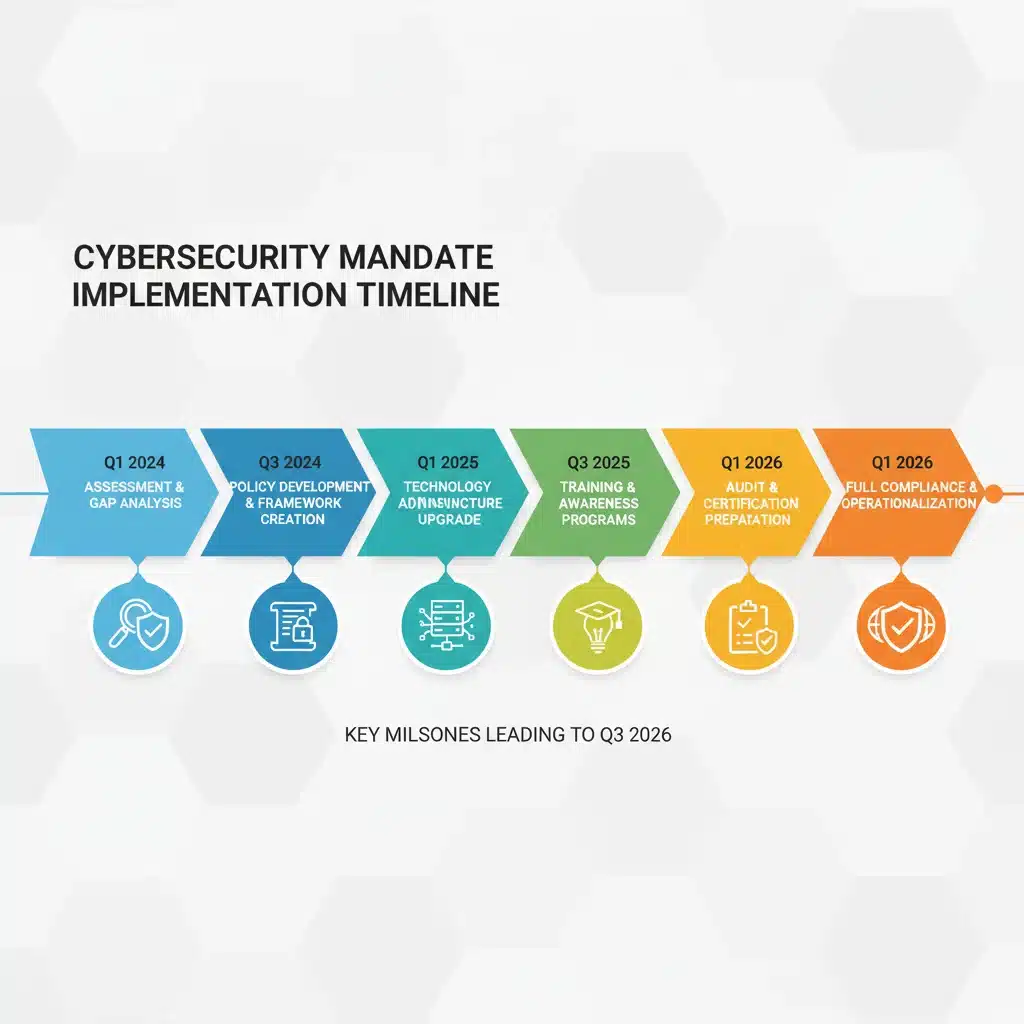
Given the Q3 2026 deadline, U.S. businesses have a critical window to prepare for these upcoming federal cybersecurity mandates. Procrastination is not an option; early preparation will minimize disruption and reduce compliance costs. Here are actionable steps your business can take now:
1. Conduct a Comprehensive Cybersecurity Audit
The first step is to understand your current security posture. Engage with internal IT teams or external cybersecurity consultants to perform a thorough audit of your existing infrastructure, systems, applications, and data. Identify current vulnerabilities, assess your compliance with existing regulations (e.g., HIPAA, PCI DSS, NIST), and determine where your organization stands against anticipated federal cybersecurity mandates. This audit should also include a review of your current policies, procedures, and employee training programs.
A gap analysis will be crucial here. Compare your current state against expected requirements of the federal cybersecurity mandates and identify specific areas where improvements are needed. This baseline understanding will inform your strategic planning and resource allocation for compliance efforts.
2. Establish a Dedicated Compliance Team or Task Force
Compliance with these new federal cybersecurity mandates will require cross-functional collaboration. Establish a dedicated team or task force comprising representatives from IT, legal, human resources, operations, and executive leadership. This team will be responsible for staying abreast of the evolving mandates, developing a compliance roadmap, overseeing implementation, and ensuring ongoing adherence. Assign clear roles and responsibilities within this team to streamline efforts and accountability.
Having executive buy-in and sponsorship is paramount. Cybersecurity is no longer solely an IT concern; it’s a fundamental business risk. The compliance team should report regularly to senior management and the board of directors to ensure adequate resources and strategic alignment.
3. Invest in Cybersecurity Technologies and Training
To meet the enhanced requirements of the federal cybersecurity mandates, businesses will likely need to invest in new or upgraded cybersecurity technologies. This might include advanced threat detection and response solutions (EDR/XDR), security information and event management (SIEM) systems, data loss prevention (DLP) tools, identity and access management (IAM) platforms, and robust backup and disaster recovery solutions. Prioritize investments based on your gap analysis and the specific requirements of the mandates.
Beyond technology, human error remains a significant factor in cyber incidents. Implement regular, mandatory cybersecurity awareness training for all employees, from new hires to senior executives. Training should cover topics such as phishing detection, secure password practices, data handling protocols, and incident reporting procedures. A well-informed workforce is your first line of defense against cyber threats.
4. Develop and Refine Policies and Procedures
The federal cybersecurity mandates will necessitate a review and update of your internal policies and procedures. This includes developing clear policies for data governance, incident response, third-party risk management, acceptable use of IT resources, and secure development practices. Ensure these policies are clearly communicated, easily accessible, and regularly reviewed and updated to reflect evolving threats and regulatory changes.
Documenting your compliance efforts will be critical. Maintain detailed records of your cybersecurity controls, risk assessments, incident reports, training logs, and audit trails. This documentation will serve as proof of your due diligence and compliance during potential audits or investigations.
5. Engage with Legal and Cybersecurity Experts
Navigating the complexities of new federal cybersecurity mandates can be challenging. It is highly advisable to engage with legal counsel specializing in cybersecurity law to understand the specific legal implications for your business and to ensure your compliance strategy aligns with legal requirements. Additionally, consider partnering with reputable cybersecurity consulting firms that can provide expertise in risk assessments, technology implementation, and ongoing managed security services.
These experts can provide invaluable guidance, help interpret the nuances of the mandates, and assist in implementing best practices that go beyond mere compliance to truly enhance your organization’s security posture. They can also provide an objective perspective on your current defenses and help identify blind spots.
Potential Challenges and Opportunities
While the new federal cybersecurity mandates present significant challenges, they also offer considerable opportunities for businesses that embrace them proactively.
Challenges:
- Cost of Compliance: Implementing new technologies, hiring skilled personnel, and engaging consultants will incur significant costs, especially for small and medium-sized businesses (SMBs).
- Resource Constraints: Many organizations, particularly SMBs, lack the internal expertise and personnel to effectively manage complex cybersecurity programs.
- Complexity and Evolving Threats: The cybersecurity landscape is dynamic. Staying compliant with evolving mandates while simultaneously defending against new threats will be an ongoing challenge.
- Integration with Existing Systems: Integrating new security controls with legacy systems can be difficult and disruptive.
- Supply Chain Management: Enforcing compliance across an entire supply chain can be logistically complex and require significant vendor management efforts.
Opportunities:
- Enhanced Security Posture: The primary benefit is a stronger, more resilient defense against cyberattacks, reducing the risk of breaches and their associated costs.
- Improved Trust and Reputation: Demonstrating compliance with robust federal cybersecurity mandates can enhance customer trust, investor confidence, and overall business reputation.
- Competitive Advantage: Businesses that achieve compliance early and effectively can differentiate themselves in the marketplace, especially when dealing with government contracts or security-conscious clients.
- Streamlined Operations: Implementing standardized security frameworks can lead to more efficient and streamlined IT operations and risk management processes.
- Better Risk Management: A structured approach to cybersecurity, driven by mandates, can lead to a more comprehensive understanding and mitigation of business risks.
- Innovation and Growth: By fostering a secure environment, businesses are better positioned to adopt new technologies and pursue digital transformation initiatives with reduced risk.
The Role of Government Agencies in Enforcement and Support
The enforcement of these new federal cybersecurity mandates will likely be a collaborative effort involving several government agencies. The Cybersecurity and Infrastructure Security Agency (CISA) is expected to play a central role in providing guidance, resources, and threat intelligence. Other agencies, such as the National Institute of Standards and Technology (NIST), will continue to develop and update cybersecurity frameworks and standards that businesses can leverage for compliance.
It’s anticipated that there will be a focus on both enforcement and support. While penalties for non-compliance will be significant, there may also be programs, grants, or resources made available, particularly for SMBs, to assist them in meeting the new requirements. Businesses should actively monitor official announcements from CISA, NIST, and other relevant federal bodies to stay informed about the latest developments, guidance, and support mechanisms. Engaging with industry associations and peer groups can also provide valuable insights and shared best practices.
Conclusion: A New Era of Cybersecurity for U.S. Businesses
The impending federal cybersecurity mandates by Q3 2026 mark a pivotal moment for U.S. businesses. These mandates are not just another layer of bureaucracy; they are a necessary evolution in national security and economic protection in an increasingly hostile digital world. While the journey to full compliance will require significant investment in time, resources, and expertise, the benefits of a stronger, more resilient cybersecurity posture far outweigh the costs.
Proactive engagement with these mandates is key. By conducting thorough assessments, strategically investing in technology and training, refining policies, and seeking expert guidance, businesses can not only meet the forthcoming requirements but also transform their cybersecurity from a reactive cost center into a proactive business enabler. The future of U.S. business security depends on a collective commitment to elevating cybersecurity standards. Start preparing now to secure your place in this new era of digital resilience.