The economic landscape is a dynamic tapestry, constantly shifting under the influence of global events, domestic policies, and the intricate dance of supply and demand. At the heart of this intricate system, particularly for the United States, lies the Federal Reserve. Its decisions on interest rates ripple through every sector of the economy, but perhaps nowhere are these ripples felt more acutely than in the housing market and, by extension, the realm of US home loans. As we look towards Q3 2026, understanding the Federal Reserve’s latest interest rate decision and its projected impact on US home loans becomes paramount for homebuyers, homeowners, and investors alike. The concept of Fed Rate Home Loans is not merely an academic exercise; it’s a practical consideration that can determine affordability, market liquidity, and ultimately, the American dream of homeownership.
The Federal Reserve, often referred to as ‘the Fed,’ operates with a dual mandate: to achieve maximum employment and stable prices. To accomplish these goals, it employs various monetary policy tools, with the federal funds rate being one of the most prominent. This benchmark rate influences other interest rates throughout the economy, including those on mortgages, car loans, and credit cards. When the Fed raises the federal funds rate, borrowing becomes more expensive, which can cool down an overheating economy and combat inflation. Conversely, a rate cut makes borrowing cheaper, stimulating economic activity. The challenge lies in striking the right balance, a task that requires careful consideration of numerous economic indicators and a forward-looking perspective.
For Q3 2026, the Federal Reserve’s approach to interest rates will be shaped by a complex interplay of factors, including inflation trends, employment figures, global economic stability, and domestic growth projections. The decisions made by the Federal Open Market Committee (FOMC) in the preceding quarters will have set the stage, and their latest pronouncements will either reinforce existing trends or signal a new direction. This article aims to dissect these decisions, explore their potential ramifications for US home loans, and provide a comprehensive outlook for the housing market in Q3 2026, with a keen focus on the dynamic relationship between the Fed Rate Home Loans.
Understanding the Federal Reserve’s Mandate and Tools
Before diving into the specifics of Q3 2026, it’s crucial to grasp the fundamental principles guiding the Federal Reserve. The Fed’s dual mandate of maximum employment and price stability is the bedrock of its monetary policy. Maximum employment doesn’t mean zero unemployment, but rather the lowest level of unemployment that can be sustained without igniting inflation. Price stability, on the other hand, generally refers to a low and stable rate of inflation, often targeted around 2% over the long run.
To achieve these objectives, the Fed has several powerful tools at its disposal:
- The Federal Funds Rate: This is the target rate for overnight lending between banks. While the Fed doesn’t directly set this rate, it influences it through open market operations, primarily by buying or selling government securities. Changes in the federal funds rate cascade through the financial system, affecting all other interest rates.
- Quantitative Easing (QE) and Quantitative Tightening (QT): These involve the Fed buying or selling large quantities of government bonds and other securities. QE aims to lower long-term interest rates and inject liquidity into the financial system, while QT does the opposite, reducing the Fed’s balance sheet and absorbing liquidity.
- Discount Rate: This is the interest rate at which commercial banks can borrow directly from the Federal Reserve. While less frequently used as a primary policy tool, it serves as a backstop for bank liquidity.
- Reserve Requirements: These are the minimum amounts of reserves that banks must hold. Changes to reserve requirements can influence the amount of money banks have available to lend.
Each of these tools can be deployed strategically to influence economic conditions, and their application has direct implications for the cost of borrowing, including mortgage rates. The interplay of these tools, combined with forward guidance on future policy, creates the environment in which the housing market operates.
The Current Economic Climate Leading into Q3 2026
To accurately predict the impact of the Fed Rate Home Loans in Q3 2026, we must first consider the economic conditions preceding it. This includes an assessment of inflation, employment, GDP growth, and global economic stability. Assuming a hypothetical scenario, let’s consider a few possibilities:
- Scenario 1: Persistent Inflation. If inflation remains stubbornly above the Fed’s 2% target, even with previous rate hikes, the Fed might be compelled to maintain a restrictive monetary policy, potentially leading to further rate increases or a prolonged period of high rates.
- Scenario 2: Economic Slowdown/Recession. Conversely, if the economy shows signs of significant slowdown or enters a recession, the Fed might pivot towards easing monetary policy, potentially cutting rates to stimulate growth and employment.
- Scenario 3: Balanced Growth and Moderate Inflation. In an ideal scenario, the economy achieves a balance of moderate growth and inflation approaching the Fed’s target. This could lead to a period of rate stability or gradual, measured adjustments.
Each of these scenarios would have distinct implications for the federal funds rate and, consequently, for mortgage rates. The Fed’s decisions are not made in a vacuum; they are a response to the prevailing economic winds and a projection of future trends. Therefore, understanding the economic context is the first step in deciphering the future of Fed Rate Home Loans.
Projected Federal Reserve Interest Rate Decision for Q3 2026
Based on a hypothetical forward-looking analysis towards Q3 2026, let’s assume the Federal Reserve has been navigating a period of moderate inflation and a steadily cooling, but still robust, labor market. In this scenario, the Fed’s primary concern would likely be to ensure that inflation continues its descent towards the 2% target without triggering an unnecessary economic downturn. Therefore, a plausible decision for Q3 2026 could be a period of stability or a very modest rate cut, signaling confidence in the disinflationary trend while offering some support to economic activity.
A slight reduction in the federal funds rate by, say, 25 basis points, or a decision to hold rates steady after a series of previous hikes, would be a carefully calibrated move. It would reflect a belief that previous tightening measures have had their intended effect and that the economy is on a sustainable path. Such a decision would aim to avoid both the pitfalls of premature easing, which could reignite inflation, and excessive tightening, which could stifle growth. The language used in the FOMC statement accompanying the decision would be critical, providing guidance on the Fed’s future intentions and its assessment of economic risks. The market’s interpretation of this forward guidance is just as important as the rate decision itself, as it influences expectations and, by extension, longer-term interest rates like those on mortgages.
Direct Impact on US Home Loans
The relationship between the Federal Reserve’s interest rate decisions and US home loans is direct and profound. Mortgage rates, particularly for fixed-rate mortgages, are not directly tied to the federal funds rate but rather to the yield on long-term Treasury bonds, which are influenced by the federal funds rate and market expectations of future inflation and economic growth. However, when the federal funds rate changes, it inevitably affects the overall cost of borrowing for banks, which then passes those costs on to consumers in the form of higher or lower mortgage rates. This is where the concept of Fed Rate Home Loans truly comes into play.
If the Fed opts for a modest rate cut or maintains stability in Q3 2026, we can anticipate several key impacts on US home loans:
- Mortgage Rate Stabilization or Slight Decrease: A stable or slightly declining federal funds rate would likely lead to a stabilization or modest decrease in mortgage rates. For prospective homebuyers, this translates to more affordable monthly payments, potentially increasing purchasing power. For homeowners, it could open up opportunities for refinancing at lower rates, reducing their overall housing costs.
- Increased Affordability: Even a small reduction in mortgage rates can significantly impact affordability, especially in higher-priced housing markets. This could encourage more buyers to enter the market, particularly first-time homebuyers who are highly sensitive to interest rate fluctuations.
- Boost in Housing Demand: Lower mortgage rates typically stimulate housing demand. As borrowing becomes cheaper, the pool of eligible buyers expands, and those who were previously on the fence might decide to make a move. This increased demand can, in turn, influence home prices.
- Refinancing Opportunities: Existing homeowners with higher mortgage rates would find an opportune moment to refinance, potentially locking in lower rates and reducing their monthly expenses. This can free up disposable income, which can then be injected back into the economy.
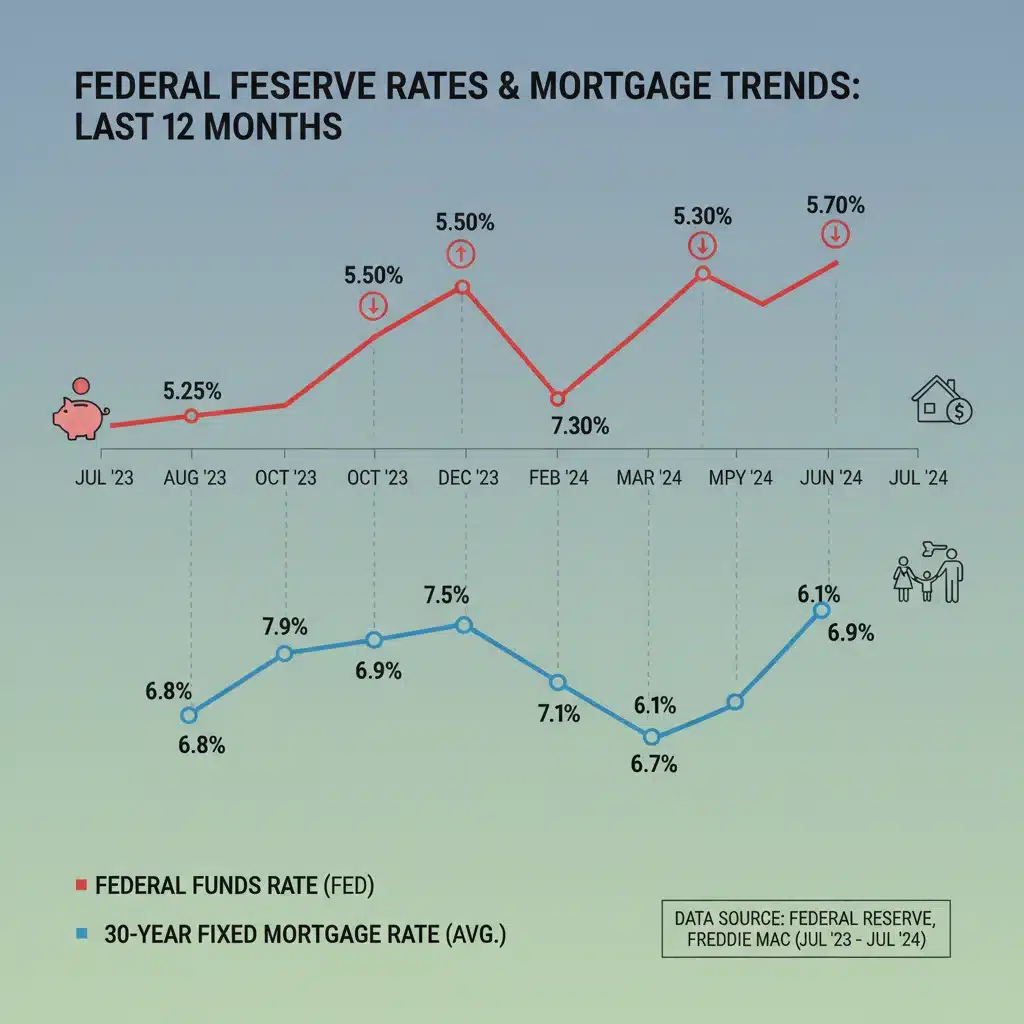
It’s important to remember that while the Fed’s actions are a major driver, other factors also influence mortgage rates, including the overall supply and demand for housing, lender competition, and global economic events. However, the foundational influence of the Fed Rate Home Loans remains undeniable.
Secondary Impacts on the US Housing Market
Beyond the direct impact on mortgage rates, the Federal Reserve’s decisions have broader implications for the entire US housing market in Q3 2026. These secondary effects can shape market dynamics, inventory levels, and home price appreciation.
- Home Price Trends: If lower interest rates stimulate demand, and supply remains constrained, home prices could see renewed upward pressure. Conversely, if demand doesn’t keep pace with supply, or if economic uncertainties persist, price growth might moderate or even decline in some areas. The balance between affordability and demand, influenced by the Fed Rate Home Loans will be key.
- Inventory Levels: Lower rates can sometimes incentivize existing homeowners to stay put, as they might be locked into historically low rates. However, if rates are low enough to encourage new purchases, it could also free up some inventory from those looking to move up or downsize. The dynamic between new construction and existing home sales will be critical.
- New Construction: Developers and home builders are sensitive to interest rates, as borrowing costs affect their ability to finance projects. Lower rates can encourage new construction, helping to alleviate supply shortages in the long run. This is a crucial element in achieving a balanced housing market.
- Regional Variations: The impact of the Fed’s decision will not be uniform across all regions. Areas with strong job growth and limited housing supply might experience more pronounced price appreciation, even with modest rate changes. Conversely, regions facing economic headwinds might see a more muted response.
These secondary impacts highlight the complex web of interconnectedness within the housing market, where the Fed’s actions serve as a powerful catalyst for change. Understanding these nuances is essential for anyone involved in buying, selling, or investing in real estate.
Challenges and Risks for Q3 2026
Despite the potential for a more favorable interest rate environment, Q3 2026 will not be without its challenges and risks. Several factors could disrupt the projected impact of the Fed Rate Home Loans:
- Unexpected Inflationary Pressures: Geopolitical events, supply chain disruptions, or a sudden surge in commodity prices could reignite inflationary pressures, forcing the Fed to reconsider its stance and potentially reverse course on rate cuts or maintain higher rates for longer.
- Economic Volatility: A global economic slowdown or domestic economic shocks (e.g., a significant downturn in a major industry) could dampen consumer confidence and reduce housing demand, even with lower interest rates.
- Housing Supply Constraints: A persistent lack of housing inventory, particularly in desirable areas, could limit the positive impact of lower rates on affordability, as increased demand simply drives up prices rather than increasing sales volume.
- Lender Behavior: While the Fed influences benchmark rates, individual lenders set their own mortgage rates based on a variety of factors, including their cost of funds, risk assessments, and profit margins. A cautious lending environment could still prevail even with lower federal funds rates.
- Government Policy Changes: New housing policies, tax incentives, or regulatory changes at the federal, state, or local level could also influence the housing market, either amplifying or mitigating the effects of the Fed’s decisions.
Navigating these challenges will require vigilance and adaptability from all market participants. The interplay of these risks with the Fed Rate Home Loans will ultimately determine the true landscape of the housing market in Q3 2026.
Strategies for Homebuyers and Homeowners in Q3 2026
Given the projected interest rate environment and the potential impacts on the housing market, what strategies should homebuyers and homeowners consider for Q3 2026? The key is to be informed, prepared, and proactive.
For Homebuyers:
- Get Pre-Approved: Understanding your borrowing capacity early on is crucial. A pre-approval will not only give you a clear budget but also make you a more attractive buyer to sellers.
- Monitor Mortgage Rates: Stay updated on the latest mortgage rate trends. Even small fluctuations can impact your monthly payments significantly. Websites, financial news outlets, and mortgage brokers are good resources.
- Save for a Down Payment: A larger down payment can reduce the amount you need to borrow, potentially lowering your interest costs over the life of the loan and making your monthly payments more manageable, especially when considering the impact of Fed Rate Home Loans.
- Be Flexible with Location: If affordability is a concern, consider expanding your search to include slightly less competitive neighborhoods or suburban areas that might offer better value.
- Work with a Knowledgeable Real Estate Agent: A local expert can provide invaluable insights into market conditions, inventory, and negotiation strategies.
For Homeowners:
- Evaluate Refinancing Options: If mortgage rates are lower than your current rate, explore refinancing. Consult with a mortgage professional to determine if refinancing makes financial sense for your specific situation, considering closing costs and the remaining term of your loan.
- Consider Home Equity: If you have significant equity in your home, you might consider a home equity loan or line of credit for renovations, debt consolidation, or other financial goals, taking advantage of potentially lower interest rates.
- Stay Informed on Market Value: Regularly assess the value of your home. This knowledge is important for financial planning, whether you’re considering selling, refinancing, or making significant home improvements.
- Budget for Potential Rate Increases (if applicable): If you have an adjustable-rate mortgage (ARM), understand the terms of your loan and budget for potential rate increases, even if the short-term outlook is for stability or slight decreases.

Proactive planning and a clear understanding of how the Fed Rate Home Loans influence the market will empower both buyers and owners to make sound financial decisions.
Long-Term Outlook Beyond Q3 2026
While Q3 2026 provides a specific snapshot, it’s also important to consider the longer-term trajectory of interest rates and the housing market. The Federal Reserve’s long-term goal is to maintain a stable economic environment conducive to sustainable growth and employment. This means that while there may be periods of adjustment, the overall approach will likely be one of careful calibration.
Factors that will influence the long-term outlook include:
- Demographic Shifts: Population growth, household formation rates, and the aging of the population will continue to shape housing demand.
- Technological Advancements: Innovations in construction, smart home technology, and real estate platforms can impact both the supply and demand sides of the market.
- Climate Change and Sustainability: Growing concerns about climate change could influence housing preferences, construction practices, and insurance costs, affecting property values and location desirability.
- Government Policies: Long-term housing affordability initiatives, infrastructure spending, and zoning reforms will play a significant role in shaping the market.
The Federal Reserve will continue to adapt its monetary policy in response to these evolving long-term trends, ensuring that the influence of the Fed Rate Home Loans remains a crucial, albeit dynamic, factor in the housing market for years to come.
Conclusion
The Federal Reserve’s latest interest rate decision for Q3 2026, while hypothetical in this discussion, underscores the profound and multifaceted impact of monetary policy on US home loans and the broader housing market. A projected scenario of stable or slightly decreasing rates could offer a welcome reprieve for homebuyers and refinancing opportunities for homeowners, potentially stimulating demand and fostering a more balanced market.
However, the economic landscape is perpetually subject to change, and unforeseen challenges can always emerge. Therefore, staying informed about economic indicators, understanding the nuances of the Fed’s communication, and adopting proactive financial strategies are essential for navigating the housing market effectively. The dynamic interplay between the Fed Rate Home Loans will continue to be a central theme for anyone with a stake in the American housing dream. By carefully monitoring these trends and making informed decisions, individuals can position themselves to thrive in the evolving real estate environment of Q3 2026 and beyond.