Navigating the Economic Landscape: Understanding Inflation Adjustments 2026
The year 2026 is on the horizon, bringing with it a fresh wave of economic recalibrations that will undoubtedly influence the financial well-being of millions across the United States. As the cost of living continues its dynamic dance, understanding the nuances of Inflation Adjustments 2026 becomes not just prudent, but essential for effective personal and household budgeting. From social security benefits to income tax brackets, various facets of our financial lives are subject to annual adjustments designed to counteract the erosive effects of inflation. This comprehensive guide aims to demystify these changes, providing clarity and actionable insights to help you prepare for the economic shifts of 2026.
Inflation, at its core, represents the rate at which the general level of prices for goods and services is rising, and consequently, the purchasing power of currency is falling. While a certain degree of inflation is considered healthy for an economy, sustained or accelerated inflation can significantly strain household budgets. To mitigate these effects, various government programs and tax codes incorporate automatic or discretionary adjustments. These Inflation Adjustments 2026 are crucial mechanisms that aim to maintain the real value of benefits and income thresholds, ensuring that individuals and families can continue to afford basic necessities and plan for their financial futures.
The impact of these adjustments extends far beyond mere numbers on a spreadsheet. They influence everything from the affordability of housing and healthcare to the daily cost of groceries and transportation. For retirees, changes in Social Security’s Cost-of-Living Adjustment (COLA) can determine their ability to maintain their standard of living. For workers, updated tax brackets and deduction limits can affect their take-home pay and overall tax burden. Business owners, too, must contend with adjusted thresholds for various tax provisions and employee benefits. Therefore, a thorough understanding of the impending Inflation Adjustments 2026 is paramount for anyone seeking to navigate the economic landscape successfully.
The Mechanism of Inflation Adjustments: How They Work
Before delving into the specifics of what to expect in 2026, it’s important to grasp the underlying mechanisms that drive these adjustments. Most inflation adjustments are tied to specific economic indices, with the Consumer Price Index for Urban Wage Earners and Clerical Workers (CPI-W) being a prominent one. This index measures the average change over time in the prices paid by urban wage earners and clerical workers for a market basket of consumer goods and services.
The Social Security Administration (SSA), for instance, uses the CPI-W to calculate the annual Cost-of-Living Adjustment (COLA) for Social Security and Supplemental Security Income (SSI) benefits. The calculation typically involves comparing the average CPI-W for a specific three-month period in the current year with the average for the same period in the previous year. The resulting percentage increase, if any, is then applied to benefits. Similarly, the Internal Revenue Service (IRS) adjusts various tax provisions, including tax brackets, standard deductions, and various credits, using inflation measures to prevent ‘bracket creep’ – a phenomenon where inflation pushes taxpayers into higher income tax brackets even though their real income hasn’t increased.
Other government programs and private sector benefits may use different indices or methodologies, but the core principle remains the same: to periodically recalibrate financial thresholds and benefits to account for changes in purchasing power. The predictive nature of these adjustments, even if estimates, allows individuals and businesses to proactively plan. The foresight into Inflation Adjustments 2026 provides a critical window for financial strategizing, enabling better informed decisions about savings, investments, and spending.
Social Security and COLA in 2026: What Beneficiaries Need to Know
For millions of retirees, disabled individuals, and survivors, Social Security benefits represent a vital source of income. The annual Cost-of-Living Adjustment (COLA) is therefore a keenly watched announcement. While the official COLA for 2026 won’t be finalized until late 2025, early projections and economic forecasts can offer valuable insights. The aim of COLA is to ensure that the purchasing power of Social Security benefits is maintained despite rising prices. This directly addresses the core concern of Inflation Adjustments 2026 for seniors and other beneficiaries.
Historically, COLA increases have varied significantly, reflecting the prevailing inflationary environment. In periods of high inflation, beneficiaries have seen substantial increases, while in periods of low inflation, the increases have been modest or even zero. The economic conditions leading up to 2026, including global supply chain dynamics, energy prices, and wage growth, will be critical determinants of the COLA percentage. Beneficiaries should pay close attention to economic reports and official announcements from the Social Security Administration as 2025 progresses to get the most accurate picture.
Beyond the percentage increase, it’s also important to consider how COLA interacts with other financial aspects. For some, a higher COLA could potentially push their income into a higher tax bracket, leading to increased taxation of their Social Security benefits. Additionally, for those receiving Medicare, increases in Part B premiums are often deducted directly from Social Security benefits, which can sometimes offset a portion of the COLA increase. Understanding these interconnected factors is crucial for accurately assessing the net impact of Inflation Adjustments 2026 on your retirement income.
Tax Brackets and Deductions: Preparing for 2026 Tax Season
The Internal Revenue Service (IRS) annually adjusts various tax provisions to account for inflation, and 2026 will be no exception. These adjustments are critical for individual taxpayers as they determine how much of their income is subject to taxation and at what rates. Key areas to watch include:
- Income Tax Brackets: The income thresholds for each federal income tax bracket are adjusted annually. This prevents ‘bracket creep,’ where inflation pushes individuals into higher tax brackets without a real increase in their purchasing power. Understanding these new thresholds for 2026 is vital for tax planning.
- Standard Deduction: The standard deduction, a fixed amount that taxpayers can subtract from their adjusted gross income (AGI) if they choose not to itemize, is also adjusted for inflation. An increase in the standard deduction can reduce taxable income for many taxpayers.
- Qualified Business Income (QBI) Deduction: The income threshold for the Qualified Business Income (QBI) deduction, also known as the Section 199A deduction, is subject to inflation adjustments. This is particularly relevant for self-employed individuals and owners of pass-through entities.
- Alternative Minimum Tax (AMT) Exemption: The exemption amount for the Alternative Minimum Tax (AMT) is also adjusted annually. The AMT is a separate tax system that runs parallel to the regular income tax, designed to ensure that high-income individuals pay a minimum amount of tax.
These adjustments, part of the broader Inflation Adjustments 2026, can have a significant impact on your overall tax liability. It is advisable to consult with a tax professional or utilize reliable tax software to understand how these changes will specifically affect your financial situation. Proactive tax planning, including reviewing your withholding or estimated tax payments, can help you avoid surprises come tax season.
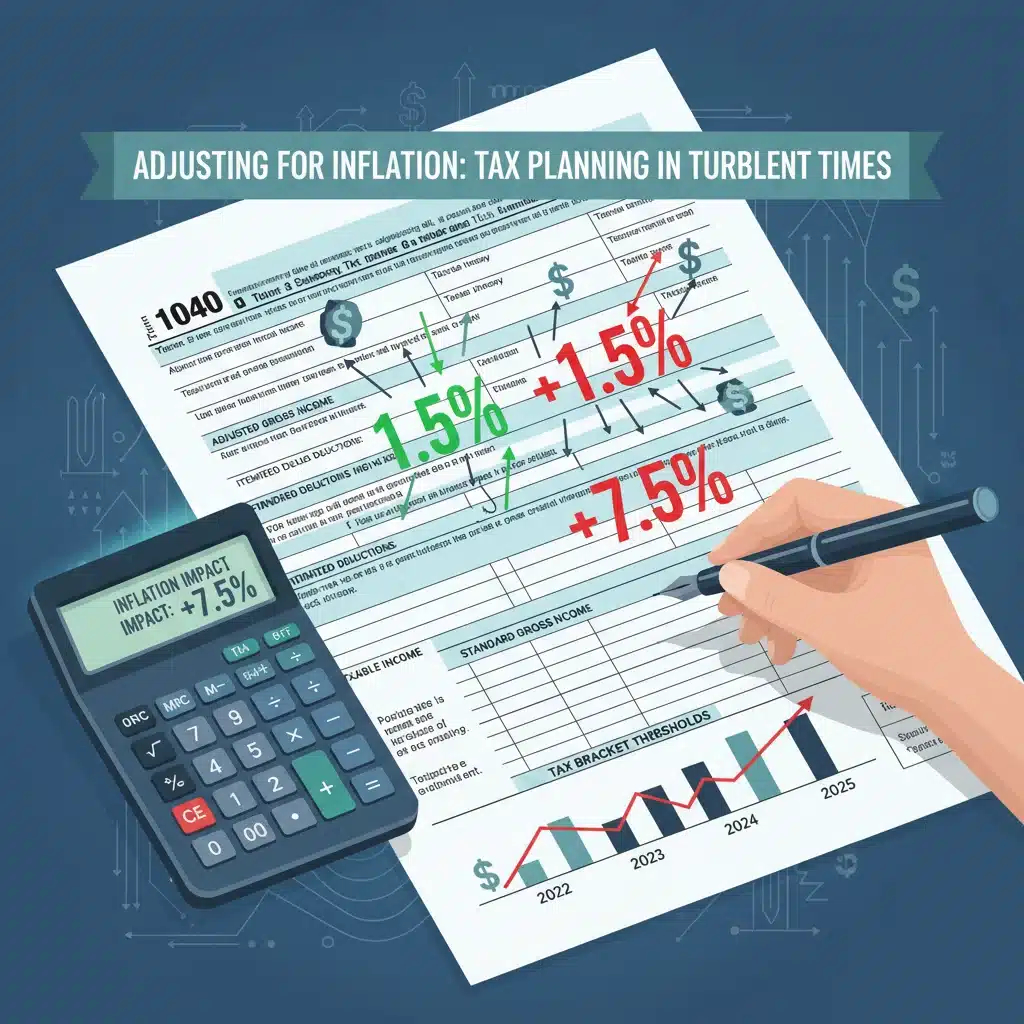
Furthermore, beyond the federal level, many states also implement their own inflation adjustments for state income tax brackets and deductions. While the focus here is on federal changes, it’s important to remember that your overall tax picture includes state and local taxes, which may also be subject to similar inflationary recalibrations. Staying informed about both federal and state-level Inflation Adjustments 2026 will provide the most comprehensive understanding of your tax obligations.
Retirement Account Contribution Limits: Planning for Your Future
For those diligently saving for retirement, the annual adjustments to contribution limits for various retirement accounts are a critical consideration. These limits, often tied to inflation, determine how much you can contribute to tax-advantaged accounts like 401(k)s, IRAs, and Health Savings Accounts (HSAs). The Inflation Adjustments 2026 in this area can significantly influence your long-term financial planning.
- 401(k) and 403(b) Plans: The elective deferral limit for these employer-sponsored plans is typically adjusted in increments based on inflation. An increase means you can save more on a tax-deferred basis, potentially leading to greater retirement security. Catch-up contributions for those aged 50 and over are also subject to adjustment.
- Individual Retirement Accounts (IRAs): Both traditional and Roth IRA contribution limits are also adjusted for inflation. While these adjustments are often smaller, they still provide an opportunity to contribute more each year.
- Health Savings Accounts (HSAs): HSAs, which offer a triple tax advantage (tax-deductible contributions, tax-free growth, and tax-free withdrawals for qualified medical expenses), also have their contribution limits adjusted annually. These accounts are becoming increasingly popular for retirement healthcare planning.
- Catch-Up Contributions: For individuals aged 50 and over, additional ‘catch-up’ contribution limits apply to 401(k)s and IRAs, allowing them to contribute more as they approach retirement. These limits are also subject to inflation adjustments.
Understanding these updated limits for 2026 is crucial for maximizing your retirement savings. If you’re able to, increasing your contributions to meet the new maximums can significantly boost your retirement nest egg over time. This aspect of Inflation Adjustments 2026 directly empowers individuals to take more control over their financial future.
It’s important to note that these adjustments are often announced by the IRS in the fall preceding the new year. Staying informed through official IRS publications or reputable financial news sources will ensure you have the most up-to-date information for your retirement planning. For many, taking full advantage of these increased limits is a cornerstone of a sound financial strategy, especially in an inflationary environment where every dollar saved and invested wisely counts more than ever.
The Broader Economic Impact of Inflation Adjustments 2026
While we’ve focused on direct impacts on individuals, the Inflation Adjustments 2026 have broader implications for the U.S. economy. These adjustments are not isolated events; they are part of a larger economic ecosystem. When Social Security benefits increase, it can boost consumer spending, which in turn can stimulate economic activity. When tax brackets are adjusted, it can influence disposable income, affecting savings rates and investment decisions.
Moreover, these adjustments reflect the government’s ongoing effort to maintain economic stability and fairness. Without inflation adjustments, the real value of benefits would erode over time, and taxpayers would face an increasing burden due to ‘bracket creep.’ By making these periodic recalibrations, policymakers aim to ensure that economic policies remain relevant and effective in a changing financial environment. The continuous monitoring and adaptation through Inflation Adjustments 2026 highlight the dynamic nature of economic governance.
However, the effectiveness of these adjustments is always a subject of debate. Some argue that the chosen inflation indices do not fully capture the real-world cost of living for certain demographics, such as seniors who spend a larger portion of their income on healthcare. Others contend that the adjustments might not keep pace with rapid inflationary spikes, leaving individuals temporarily exposed. These discussions underscore the complexity of economic policy and the ongoing challenge of balancing various interests.
Strategies for Personal Budgeting Amidst Inflation Adjustments 2026
Given the certainty of Inflation Adjustments 2026, proactive personal budgeting and financial planning are more crucial than ever. Here are some strategies to help you navigate the changes:
- Review Your Budget Regularly: Inflation means that the cost of your regular expenses may increase. Periodically review your budget to ensure your income still covers your expenditures and to identify areas where you might need to adjust spending.
- Anticipate Changes in Income and Expenses: If you are a Social Security beneficiary, factor in the anticipated COLA increase. If you are a taxpayer, consider how adjusted tax brackets might affect your take-home pay.
- Maximize Retirement Contributions: Take advantage of increased contribution limits for 401(k)s, IRAs, and HSAs. Even small increases can make a big difference over time due to compounding.
- Explore Tax Planning Opportunities: Consult with a financial advisor to understand how the new tax rules might create opportunities for tax-efficient investing or deductions.
- Build an Emergency Fund: An adequate emergency fund is always important, but even more so in an inflationary environment. It provides a buffer against unexpected price increases or financial shocks.
- Consider Inflation-Protected Investments: Explore investment options designed to protect against inflation, such as Treasury Inflation-Protected Securities (TIPS) or real estate.
- Stay Informed: Continuously monitor economic news and official announcements regarding inflation and financial adjustments. Knowledge is power when it comes to managing your finances.
By adopting these proactive strategies, individuals and families can better prepare for the financial shifts brought about by Inflation Adjustments 2026. The goal is not just to react to changes, but to anticipate them and position yourself for continued financial stability and growth.
Impact on Healthcare Costs and Premiums
Healthcare costs are a significant concern for many Americans, and these costs are also subject to inflationary pressures. While not always directly tied to the same indices as Social Security or tax brackets, healthcare premiums, deductibles, and out-of-pocket maximums for employer-sponsored plans and Medicare often see annual increases. These increases are an integral part of the broader discussion around Inflation Adjustments 2026, as they directly impact household budgets.
For Medicare beneficiaries, changes in Part B, Part D, and Medigap premiums are particularly relevant. These premiums can significantly erode the purchasing power of Social Security COLA increases. It’s essential for seniors to review their Medicare options annually during the open enrollment period to ensure they have the most cost-effective coverage that meets their healthcare needs. The interplay between COLA and rising healthcare costs is a critical financial challenge for many retirees, emphasizing the need for careful planning.
For those with employer-sponsored health insurance, expect to see annual adjustments to premiums, deductibles, and co-payments. These changes are often driven by medical inflation, which can sometimes outpace general consumer price inflation. Understanding these potential increases and factoring them into your 2026 budget will be crucial. The comprehensive view of Inflation Adjustments 2026 must include these significant healthcare considerations to provide a realistic financial outlook.

Furthermore, the cost of prescription drugs and medical services can also see price hikes. While some of these are negotiated, the underlying inflationary environment contributes to overall healthcare expenditure growth. Consumers should be proactive in seeking generic alternatives, utilizing patient assistance programs, and engaging with their healthcare providers to discuss cost-effective treatment options. These individual actions, combined with a broader understanding of Inflation Adjustments 2026, can help mitigate the financial burden of healthcare.
Conclusion: Proactive Planning for 2026
The economic currents of inflation are a constant force, requiring individuals and families to remain vigilant and adaptable. The Inflation Adjustments 2026, impacting everything from Social Security benefits and tax brackets to retirement account limits and healthcare costs, represent a critical juncture for financial planning. By understanding how these adjustments work and what they entail, you can make informed decisions that safeguard your financial well-being.
The key takeaway is the importance of proactive engagement with your personal finances. Don’t wait for the official announcements to drop; instead, begin to anticipate and plan based on economic forecasts and historical trends. Regularly review your budget, maximize your savings, and seek professional advice when needed. By taking these steps, you can transform the challenge of economic change into an opportunity for greater financial security and peace of mind in 2026 and beyond. The collective impact of these Inflation Adjustments 2026 will shape the financial landscape for years to come, and being prepared is your best defense.