Child Tax Credit 2026: What US Families Need to Know About Eligibility and Maximizing Their Benefits with the Latest IRS Guidelines
As we look ahead to 2026, understanding the nuances of the Child Tax Credit 2026 becomes paramount for millions of American families. This critical tax provision has undergone various changes in recent years, significantly impacting household finances. For parents and guardians, staying informed about the latest IRS guidelines, eligibility requirements, and strategies for maximizing this benefit is not just helpful, it’s essential for sound financial planning. This comprehensive guide aims to demystify the Child Tax Credit 2026, providing you with the knowledge needed to confidently navigate the tax landscape and ensure your family receives every dollar it’s entitled to.
The Child Tax Credit (CTC) is a valuable federal tax credit designed to provide financial relief to families with qualifying children. Its evolution has seen temporary expansions and subsequent returns to more traditional structures, making it a topic of continuous discussion and, at times, confusion. Our focus today is specifically on the projected landscape for 2026, based on current legislation and anticipated IRS regulations. We’ll delve into who qualifies, how much you can expect to receive, and the proactive steps you can take now to prepare for tax season.
Understanding the Basics of the Child Tax Credit 2026
To fully grasp the implications of the Child Tax Credit 2026, it’s crucial to start with the foundational elements. What exactly is a tax credit, and how does it differ from a tax deduction? A tax credit directly reduces the amount of tax you owe, dollar for dollar. For example, a $2,000 credit reduces your tax liability by $2,000. This is more beneficial than a tax deduction, which only reduces your taxable income, thereby lowering the amount of tax you owe based on your tax bracket.
Key Definitions and Concepts
- Tax Credit: A direct reduction in the amount of tax you owe.
- Refundable Credit: If a refundable credit reduces your tax liability to below zero, the IRS will issue you the difference as a refund. This is a crucial aspect for many lower-income families.
- Non-Refundable Credit: This type of credit can reduce your tax liability to zero, but you won’t receive any portion of the credit back as a refund if it exceeds your tax liability.
- Adjusted Gross Income (AGI): Your gross income minus certain deductions. AGI is often used to determine eligibility for various tax credits and deductions, including the Child Tax Credit 2026.
The Child Tax Credit 2026, as it currently stands under existing law, is primarily a non-refundable credit, with a portion potentially being refundable through the Additional Child Tax Credit (ACTC). This distinction is vital for families, as it dictates whether they can receive a payment even if they owe no federal income tax.
Who Qualifies for the Child Tax Credit 2026? Eligibility Criteria
Eligibility for the Child Tax Credit 2026 hinges on several factors, primarily related to the child and the taxpayer’s income. Understanding these criteria is the first step toward claiming the credit.
Child Eligibility Requirements
For a child to be considered a qualifying child for the Child Tax Credit 2026, they must meet all of the following tests:
- Age Test: The child must be under age 17 at the end of the tax year (meaning they must be 16 or younger on December 31, 2026).
- Relationship Test: The child must be your son, daughter, stepchild, foster child, brother, sister, half-brother, half-sister, stepbrother, stepsister, or a descendant of any of them (e.g., a grandchild, niece, or nephew).
- Residency Test: The child must have lived with you for more than half of the tax year (more than six months) in the United States. Temporary absences due to special circumstances (like schooling, medical care, vacation, or detention) count as time lived at home.
- Support Test: The child must not have provided more than half of their own support for the year.
- Joint Return Test: The child cannot file a joint return for the year (unless filed only to claim a refund of withheld income tax or estimated tax paid).
- Citizenship Test: The child must be a U.S. citizen, U.S. national, or U.S. resident alien.
It’s important to note that these requirements are strict, and failing to meet even one could disqualify a child from being claimed for the Child Tax Credit 2026. Special rules apply in cases of divorce or separation, where only one parent can claim the child. Typically, this is the custodial parent, although the non-custodial parent may be able to claim the credit if the custodial parent signs a written declaration (Form 8332) releasing the claim to the exemption.
Taxpayer Income Requirements
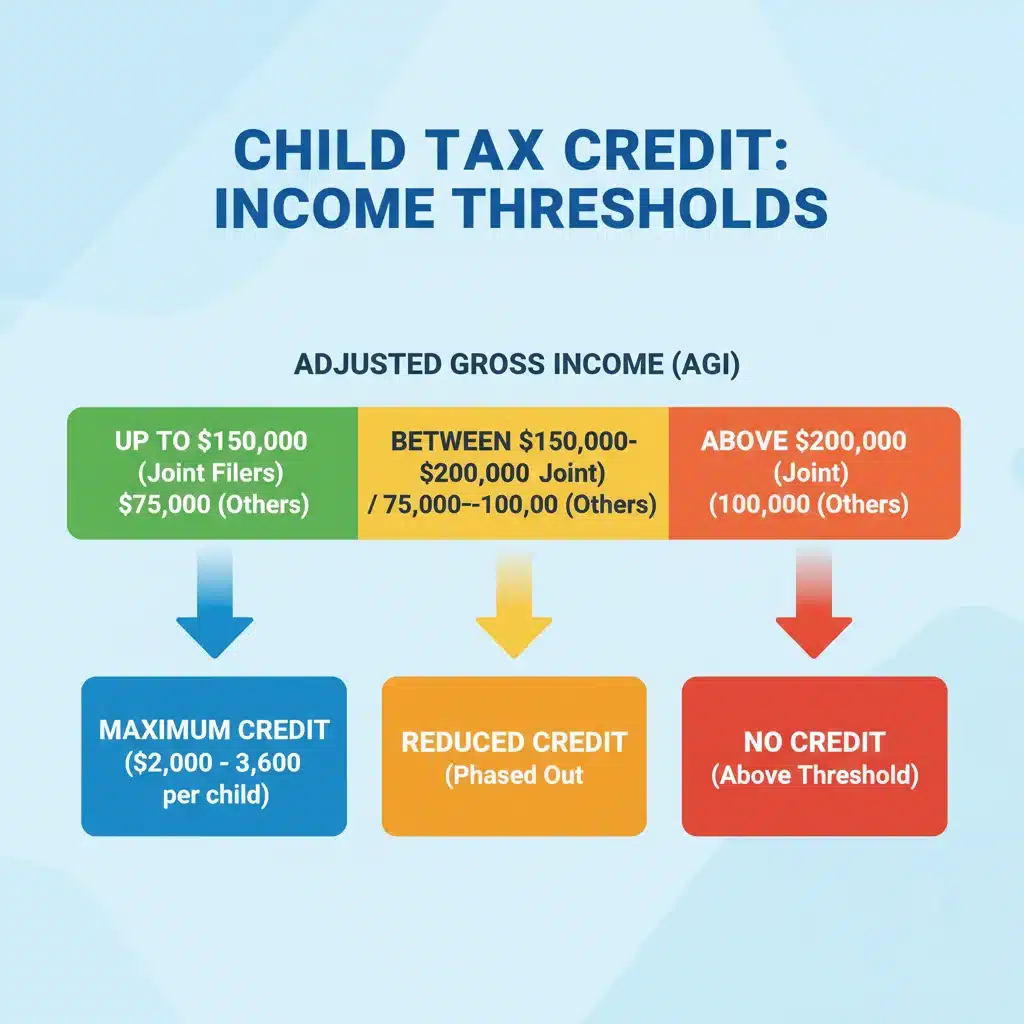
The amount of Child Tax Credit 2026 you can receive is subject to income limitations based on your Modified Adjusted Gross Income (MAGI). The credit begins to phase out once your MAGI exceeds certain thresholds. For 2026, based on current law, these thresholds are:
- $200,000 for single filers, heads of household, and married filing separately.
- $400,000 for married couples filing jointly.
For every $1,000 (or fraction thereof) your MAGI exceeds these thresholds, the credit amount is reduced by $50. This phase-out can significantly reduce or even eliminate the credit for higher-income families. It’s crucial to calculate your estimated MAGI for 2026 to understand your potential credit amount.
Maximizing Your Child Tax Credit 2026 Benefits
Even with strict eligibility rules and income phase-outs, there are strategies families can employ to maximize their Child Tax Credit 2026. Proactive planning can make a significant difference in your financial outcome.
Understanding the Credit Amount
Under current law, the maximum Child Tax Credit 2026 is $2,000 per qualifying child. Of this $2,000, up to $1,600 (subject to inflation adjustments) may be refundable as the Additional Child Tax Credit (ACTC) for families with lower incomes. This means that if your tax liability is less than $1,600, you could still receive a portion of the credit as a refund. The refundable portion is typically tied to earned income thresholds, meaning you must have a certain amount of earned income to qualify for it.
Strategies for Maximizing the Credit
- Accurate Income Projections: Since the credit phases out based on MAGI, accurately projecting your income for 2026 is critical. If your income is close to the phase-out thresholds, consider strategies to reduce your MAGI, such as contributing to a traditional IRA or 401(k), or utilizing Health Savings Accounts (HSAs).
- Keep Meticulous Records: Maintain thorough records of your child’s age, residency, and support. This includes birth certificates, school records, medical bills, and any other documentation that proves your child meets the qualifying tests. In case of an IRS audit, having these documents readily available will be invaluable.
- Understand the Refundable Portion (ACTC): If your income is lower, focus on the refundable portion of the Child Tax Credit 2026. The ACTC has its own set of rules, often requiring a minimum amount of earned income. Ensure you meet these criteria if you anticipate needing the refundable portion.
- Consider Filing Status: Your filing status can impact your income thresholds. For instance, married couples filing jointly have a higher phase-out threshold than single filers. If you are separated or considering divorce, understand how your filing status will affect your eligibility.
- Review Dependency Rules: Ensure you are the only one claiming your child. If there’s a possibility of another person (e.g., an ex-spouse or another relative) claiming the same child, communicate clearly and ensure only one party claims the credit to avoid issues with the IRS.
- Stay Updated on Legislation: Tax laws, especially those concerning family credits like the CTC, can change. While we are discussing the Child Tax Credit 2026 based on current law, new legislation could be introduced that alters the credit’s structure, amount, or eligibility. Subscribing to IRS updates or consulting with a tax professional can keep you informed.
IRS Guidelines and What to Expect in 2026
The Internal Revenue Service (IRS) is the primary authority for tax matters, and their guidelines are the definitive source for understanding the Child Tax Credit 2026. While specific forms and instructions for 2026 won’t be released until closer to the tax year, we can anticipate certain processes and requirements based on current practices.
Key IRS Forms and Documentation
- Form 1040, U.S. Individual Income Tax Return: This is the main form you will use to file your taxes and claim the Child Tax Credit 2026.
- Schedule 8812, Credits for Qualifying Children and Other Dependents: This schedule is used to figure the amount of your Child Tax Credit and Additional Child Tax Credit. You will attach this to your Form 1040.
- Social Security Number (SSN): Each qualifying child must have a valid SSN issued by the Social Security Administration by the due date of your tax return (including extensions). An Individual Taxpayer Identification Number (ITIN) is not sufficient for the CTC, though it may be for other dependent credits.
Common Pitfalls to Avoid
Navigating tax credits can be complex, and certain errors can lead to delays or even audits. Be mindful of these common pitfalls when claiming the Child Tax Credit 2026:
- Incorrectly Claiming a Child: Ensure your child meets all six eligibility tests. Misrepresenting age, residency, or relationship can lead to significant issues.
- Errors in Income Reporting: Incorrectly reporting your AGI can lead to a miscalculation of your credit, potentially resulting in an underpayment or overpayment that needs to be rectified later.
- Missing or Incorrect SSNs: A missing or incorrect SSN for your child is one of the most common reasons for delayed or rejected tax returns when claiming the CTC. Double-check all numbers.
- Not Filing a Return: Even if you owe no tax, you must file a federal income tax return to claim the refundable portion of the Child Tax Credit 2026 (ACTC).
- Ignoring Changes in Life Circumstances: Major life events like marriage, divorce, birth of a child, or a significant change in income can impact your eligibility and credit amount. Adjust your tax planning accordingly.

The Economic Impact and Future of the Child Tax Credit
The Child Tax Credit 2026 isn’t just a line item on a tax form; it’s a significant tool in family economic policy. Its impact extends beyond individual households, influencing poverty rates, child well-being, and broader economic stability. The temporary expansion of the CTC in 2021, which made the credit fully refundable and increased its maximum amount, demonstrated its profound effect on reducing child poverty.
Debates and Potential Legislative Changes
The future of the CTC is often a subject of legislative debate. Proponents advocate for permanent expansions, citing the positive impact on child poverty and economic growth. Opponents often raise concerns about the cost and potential disincentives to work. While our discussion focuses on the Child Tax Credit 2026 under current law, it’s always possible that political developments could lead to new legislation that alters the credit. Keeping an eye on these discussions is part of comprehensive financial awareness.
For families, understanding the current law provides a stable foundation for planning. Any future changes would likely be widely publicized by the IRS and tax advocacy groups. Staying informed through reputable sources like the IRS website, financial news outlets, and trusted tax professionals is crucial.
Planning for Your Family’s Financial Future with the Child Tax Credit 2026
Effective financial planning involves looking ahead, and the Child Tax Credit 2026 is a key component for families. By taking proactive steps now, you can ensure you are well-prepared to claim this valuable benefit.
Actionable Steps for Families
- Estimate Your 2026 Income: Start rough estimates of your household income for 2026. This will give you an idea of where you stand regarding the CTC’s income thresholds.
- Gather Necessary Documentation: Begin compiling birth certificates, SSN cards, and residency proofs for all qualifying children. Ensure all names and numbers match official records.
- Consult a Tax Professional: If your financial situation is complex, or if you have questions about specific eligibility criteria, consulting with a qualified tax professional is highly recommended. They can provide personalized advice and help you navigate the intricacies of the Child Tax Credit 2026.
- Adjust Withholding: If you anticipate a significant tax credit, you might be able to adjust your W-4 form with your employer to reduce the amount of tax withheld from your paycheck throughout the year. This can provide more immediate access to your funds, rather than waiting for a large refund. However, be cautious and ensure you don’t under-withhold, which could lead to penalties.
- Educate Yourself Continuously: Tax laws are not static. Make it a habit to review IRS publications and reputable tax news sources annually to stay abreast of any changes that might affect the Child Tax Credit 2026 or other family-related tax benefits.
The Role of Financial Literacy
Beyond the specifics of the Child Tax Credit 2026, enhancing your overall financial literacy is a powerful tool for family well-being. Understanding how tax credits work, how to manage your income, and how to plan for future expenses (like education or retirement) can empower you to make informed decisions that benefit your family for years to come. The CTC is one piece of a larger financial puzzle, and a holistic approach to your finances will yield the best results.
Conclusion: Securing Your Family’s Benefits with the Child Tax Credit 2026
The Child Tax Credit 2026 represents a vital financial opportunity for millions of US families. By thoroughly understanding the eligibility criteria, income limitations, and the distinction between the non-refundable and refundable portions, you can confidently approach tax season. This credit is designed to support families, and with careful planning and attention to detail, you can ensure your family receives its full benefit.
Remember to keep accurate records, project your income, and consider seeking professional advice if needed. The landscape of tax legislation can shift, but an informed and proactive approach will always be your best defense. Utilize this guide to empower yourself with the knowledge needed to maximize your Child Tax Credit 2026 and strengthen your family’s financial foundation. Your diligence today will translate into tangible benefits for your family tomorrow.
Stay informed, stay organized, and take advantage of every opportunity to optimize your tax position. The Child Tax Credit 2026 is more than just a credit; it’s an investment in your children’s future and your family’s economic stability.