AI in K-12 Education: Preparing US Students for 2030 Workforce
AI in K-12 Education: Preparing US Students for 2030 Workforce
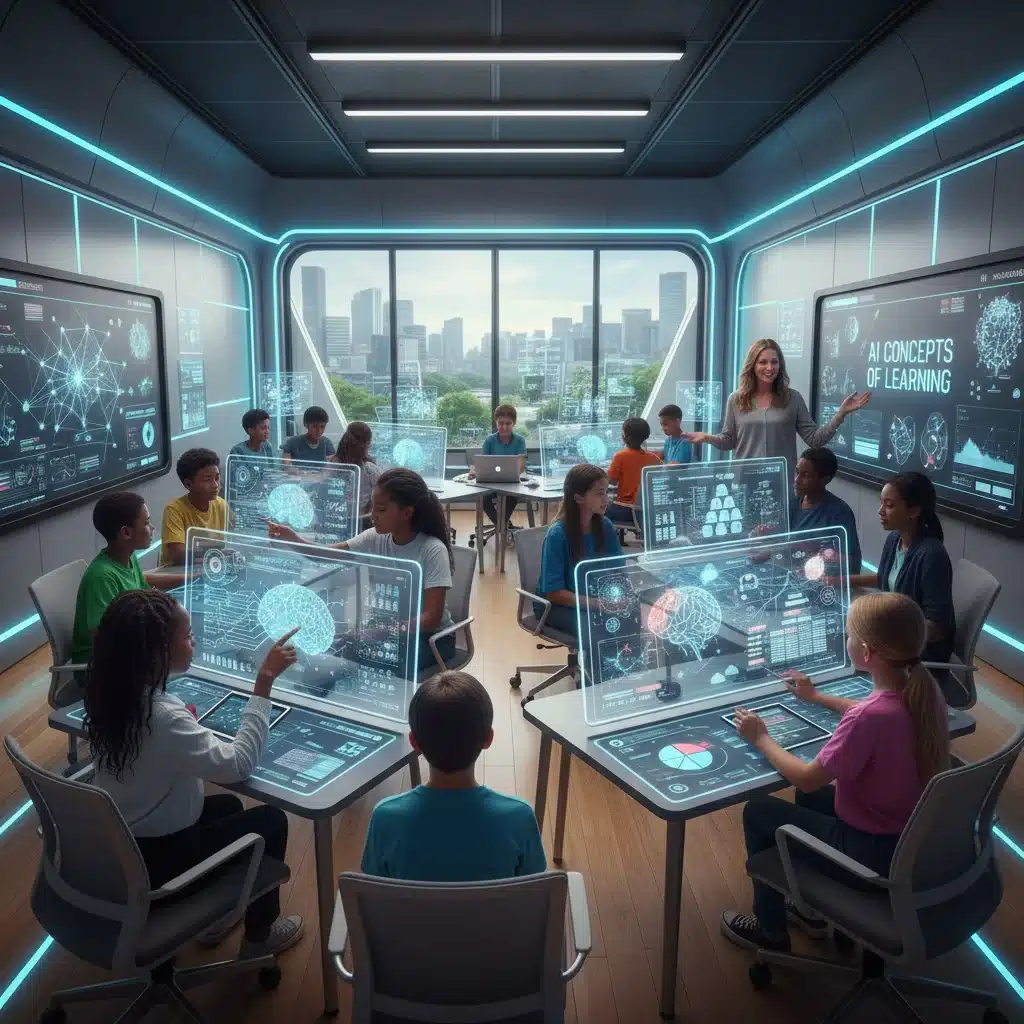
The rapid advancement of Artificial Intelligence (AI) is reshaping industries, economies, and societies worldwide. As we approach 2030, the demand for a workforce equipped with AI literacy, skills, and ethical understanding will be paramount. This profound shift necessitates a fundamental re-evaluation of the United States K-12 education system. Integrating AI K-12 curriculum is no longer an optional enhancement but a critical imperative to ensure that American students are not just consumers of technology, but creators, innovators, and responsible citizens in an AI-driven world. This comprehensive article delves into the transformative impact of AI on US K-12 education, exploring the strategies, challenges, and immense opportunities that lie ahead in preparing the next generation for the future workforce.
The conversation around AI in education often evokes images of advanced robotics and complex algorithms, but its application in K-12 is far more foundational. It’s about cultivating computational thinking, problem-solving, data literacy, and an ethical framework for engaging with intelligent systems. For the US to maintain its competitive edge and foster a society capable of harnessing AI’s potential for good, a proactive and holistic approach to AI education is essential. This means moving beyond isolated coding classes to weave AI concepts across various subjects, making them accessible and relevant to all students, regardless of their future career paths.
The Urgency of AI Integration in K-12 Education
The landscape of work is undergoing a profound transformation. Automation and AI are projected to displace certain jobs while simultaneously creating new ones that require novel skill sets. A 2020 report by the World Economic Forum, for example, estimated that 85 million jobs may be displaced by 2025 due to automation, while 97 million new roles may emerge. These new roles will predominantly demand skills related to AI, data science, and human-computer interaction. Without a robust AI K-12 curriculum, a significant portion of the future workforce will be unprepared for these evolving demands, leading to potential skill gaps and economic disparity.
Beyond job readiness, AI literacy is becoming a critical component of civic literacy. Students need to understand how AI influences their daily lives, from personalized recommendations to news algorithms, and how it can impact societal issues like privacy, bias, and democracy. Equipping them with the ability to critically evaluate AI systems, understand their limitations, and participate in ethical discussions surrounding AI is crucial for fostering informed and responsible citizens.
Furthermore, early exposure to AI concepts can ignite interest in STEM fields, particularly among underrepresented groups. By demystifying AI and presenting it in engaging, accessible ways, schools can inspire a new generation of scientists, engineers, and technologists who will drive future innovation. The goal is not to turn every student into an AI engineer, but to ensure every student possesses a foundational understanding of AI, empowering them to thrive in an AI-powered world.
Defining the Scope of AI K-12 Curriculum
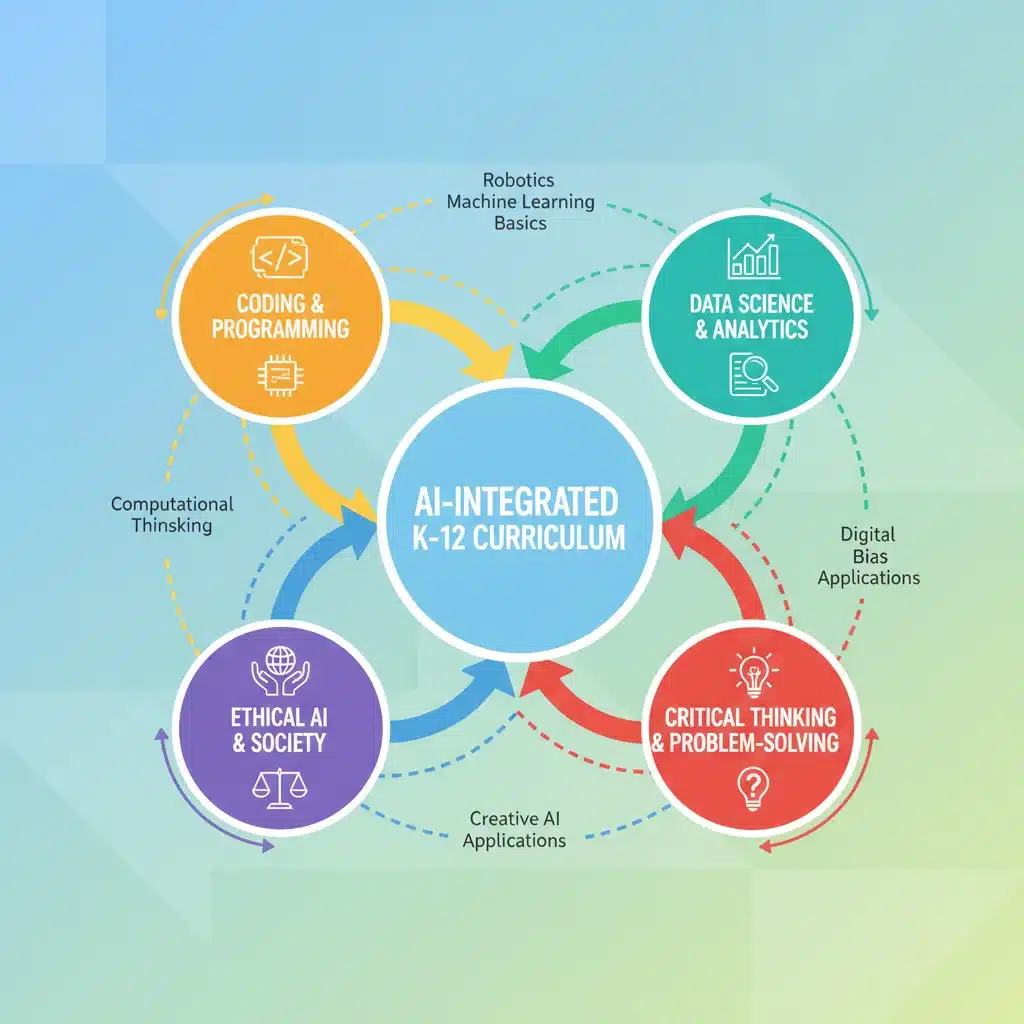
What exactly constitutes an effective AI K-12 curriculum? It’s more than just coding; it’s a multidisciplinary approach that encompasses several key areas:
- Computational Thinking: The ability to break down problems into smaller parts, recognize patterns, abstract information, and design algorithms. This is fundamental to understanding how AI works.
- Data Literacy: Understanding how data is collected, analyzed, interpreted, and used to train AI models. This includes concepts like data privacy, bias in data, and ethical data handling.
- Machine Learning Fundamentals: Introduction to basic concepts of how machines learn from data, including supervised, unsupervised, and reinforcement learning, presented in an age-appropriate manner.
- Robotics and Automation: Hands-on experience with robotic systems and understanding the principles of automation, often serving as a tangible entry point into AI.
- Ethical AI and Societal Impact: Critical discussions about the ethical implications of AI, including bias, fairness, accountability, transparency, and the impact on employment and society.
- AI Applications and Impact: Exploring real-world applications of AI across various domains, from healthcare and transportation to entertainment and environmental science.
- Human-AI Interaction: Understanding how humans interact with AI systems and designing user-friendly interfaces.
These components should not be taught in isolation but rather integrated across subjects. For instance, in mathematics, students could explore algorithms and data analysis; in social studies, they could discuss the societal impact of AI; in language arts, they could analyze AI-generated content or debate AI ethics. This interdisciplinary approach ensures that AI literacy becomes a pervasive skill rather than a specialized niche.
Strategies for Effective AI K-12 Curriculum Implementation
Implementing an effective AI K-12 curriculum requires a multi-pronged strategy involving curriculum development, teacher training, resource allocation, and community engagement. Simply adding a new subject won’t suffice; a systemic shift is needed.
Curriculum Development and Alignment
Developing an age-appropriate and engaging AI curriculum is paramount. This involves:
- National and State Standards: Aligning AI concepts with existing national and state educational standards (e.g., CSTA K-12 Computer Science Standards, Next Generation Science Standards) to ensure seamless integration and avoid curriculum overload.
- Modular and Progressive Learning: Designing a curriculum that introduces basic concepts in early grades and progressively builds complexity through middle and high school. For example, elementary students might engage with drag-and-drop programming for simple AI tasks, while high school students could explore machine learning algorithms with Python.
- Project-Based Learning: Emphasizing hands-on, project-based learning experiences that allow students to apply AI concepts to solve real-world problems. This fosters creativity, critical thinking, and collaboration.
- Interdisciplinary Integration: Creating lesson plans and resources that allow teachers to integrate AI concepts into subjects like science, math, social studies, and even arts.
Teacher Professional Development
Teachers are at the forefront of curriculum delivery, and their preparedness is crucial. Many educators may lack formal training in AI. Therefore, robust professional development programs are essential:
- Foundational AI Concepts: Providing teachers with a solid understanding of AI principles, terminology, and applications.
- Pedagogical Strategies: Training teachers on effective pedagogical approaches for teaching AI, including project-based learning, inquiry-based learning, and fostering ethical discussions.
- Resource Utilization: Equipping teachers with the knowledge and skills to utilize various AI education tools, platforms, and resources.
- Ongoing Support and Community: Establishing professional learning communities and providing ongoing support to teachers as they implement new AI curricula.
Investment in teacher training is not just an expense; it’s an investment in the future of education and the workforce. Without well-prepared educators, even the best curriculum will struggle to achieve its full potential.
Addressing Challenges and Ensuring Equity
While the benefits of an AI K-12 curriculum are clear, several challenges must be addressed to ensure equitable and effective implementation across all schools and districts.
Access to Technology and Resources
A significant hurdle is the digital divide. Not all schools have adequate access to necessary technology, such as reliable internet, up-to-date computers, and specialized AI hardware (e.g., robotics kits, AI-enabled sensors). Addressing this requires:
- Funding Initiatives: Government funding and philanthropic partnerships to provide technology infrastructure and resources to underserved schools.
- Open-Source and Low-Cost Tools: Promoting the use of accessible, open-source AI tools and platforms that minimize financial barriers.
- Blended Learning Models: Designing curricula that can be delivered through a combination of online and offline activities, reducing reliance on constant high-speed internet.
Curriculum Overload and Integration
Schools are already grappling with packed curricula. Adding AI as a standalone subject could lead to overload. The solution lies in thoughtful integration rather than mere addition:
- Cross-Curricular Projects: Developing projects that naturally incorporate AI concepts into existing subjects.
- Focus on Foundational Skills: Emphasizing computational thinking and problem-solving skills that are transferable across disciplines and underpin AI.
- Flexible Frameworks: Providing flexible curriculum frameworks that allow schools to adapt AI integration to their specific contexts and resources.
Ethical Considerations and Bias
AI is not neutral; it can perpetuate and even amplify existing societal biases if not developed and deployed carefully. Teaching ethical AI is paramount:
- Bias Awareness: Educating students about how bias can be introduced into AI systems through data or algorithms.
- Fairness and Accountability: Discussing the importance of fairness, transparency, and accountability in AI development.
- Critical Thinking: Fostering critical thinking skills to evaluate AI applications and their potential societal impacts.
These discussions should be integrated throughout the curriculum, encouraging students to think deeply about the implications of AI technology.
The Role of Stakeholders in Shaping AI K-12 Curriculum
Successful integration of AI K-12 curriculum requires collaboration among various stakeholders:
- Government Agencies: Developing national guidelines, providing funding, and promoting research in AI education.
- Educational Institutions: Designing and implementing curricula, training teachers, and evaluating program effectiveness.
- Technology Companies: Partnering with schools to provide resources, expertise, and age-appropriate AI tools.
- Parents and Communities: Engaging parents and the wider community to build awareness and support for AI education initiatives.
- Researchers: Conducting studies on the most effective pedagogical approaches for teaching AI and assessing student outcomes.
A unified effort from these groups will ensure that AI education is not just a passing trend but a sustainable and impactful component of the US K-12 system.
Real-World Applications and Future Workforce Skills
The goal of integrating AI K-12 curriculum is to prepare students for a future where AI will be ubiquitous. This means fostering skills that are highly valued in an AI-driven workforce:
- Problem-Solving: AI excels at executing defined tasks, but humans are needed to identify problems, define objectives, and interpret complex results.
- Creativity and Innovation: While AI can generate content, true innovation and creative breakthroughs still largely stem from human ingenuity.
- Critical Thinking: The ability to analyze information, question assumptions, and make reasoned judgments is more important than ever in an age of abundant, and sometimes misleading, AI-generated content.
- Collaboration and Communication: Working effectively in teams, often with AI tools, and communicating complex ideas clearly are essential skills.
- Adaptability and Lifelong Learning: The pace of technological change means that continuous learning and adaptability will be crucial for career longevity.
- Ethical Reasoning: As AI becomes more powerful, the ability to consider its ethical implications and make responsible decisions will be paramount.
By focusing on these human-centric skills alongside AI literacy, the K-12 system can cultivate well-rounded individuals who can navigate and shape the future, not just react to it.

Success Stories and Pilot Programs
Several states and districts across the US have already begun pioneering efforts in AI education, offering valuable lessons and models for broader implementation. These pilot programs often focus on different aspects of AI, from coding and robotics to ethical discussions and data science. For instance, some districts have introduced AI modules in computer science classes, while others have integrated AI concepts into science fairs or extracurricular clubs.
These early successes demonstrate that with proper planning, resources, and teacher support, AI education can be effectively implemented at the K-12 level. They highlight the importance of starting small, experimenting with different approaches, and learning from both successes and challenges. Sharing best practices and creating a national repository of AI education resources will be vital for scaling these efforts.
Looking Towards 2030 and Beyond
The journey to fully integrate AI K-12 curriculum into the US education system by 2030 is ambitious but achievable. It requires a sustained commitment from all levels of government, educational leadership, and the broader community. The goal is not merely to teach students about AI, but to empower them to be active participants in shaping its future. This means fostering a generation that is not only technologically proficient but also ethically conscious, critically minded, and capable of leveraging AI to solve humanity’s most pressing challenges.
As AI continues to evolve, so too must our educational approaches. The curriculum must remain dynamic, adapting to new technological advancements and societal needs. This necessitates ongoing research, continuous professional development for educators, and a flexible mindset within the education system. The future workforce will demand individuals who can not only use AI tools but also understand their underlying principles, critique their outputs, and contribute to their ethical development.
Ultimately, the successful integration of AI into K-12 education will determine the US’s ability to thrive in the 21st century. By prioritizing AI literacy, we are investing in the intellectual capital of our nation, ensuring that our students are not just prepared for tomorrow’s jobs, but are also equipped to lead and innovate in a rapidly changing world.
Conclusion: A Future-Ready K-12 Education System
The imperative to integrate AI K-12 curriculum into the US education system is clear and urgent. By 2030, the workforce will be profoundly influenced by artificial intelligence, demanding a new set of skills and a deeper understanding of intelligent systems. This article has illuminated the critical components of an effective AI curriculum, the strategies for successful implementation, and the significant challenges that must be overcome, particularly in ensuring equitable access and addressing ethical considerations. The path forward requires a concerted effort from policymakers, educators, industry leaders, and communities to develop comprehensive, age-appropriate, and engaging AI learning experiences.
Investing in teacher training, providing adequate technological resources, and fostering an interdisciplinary approach are foundational elements for success. More importantly, embedding ethical considerations and critical thinking skills within AI education will cultivate a generation that can not only leverage AI’s power but also guide its development responsibly. The goal is to prepare students to be informed citizens, creative problem-solvers, and adaptable professionals who can navigate and contribute positively to an AI-driven future.
The transformation of the US K-12 curriculum to embrace AI is not just about staying competitive; it’s about empowering every student with the knowledge and skills to thrive in a world increasingly shaped by artificial intelligence. By taking decisive action now, we can ensure that the next generation is not merely ready for the 2030 workforce but is prepared to lead it, innovate within it, and shape a more intelligent and equitable future for all.